Showing posts with label Sax Jive. Show all posts

Thursday, 16 April 2015

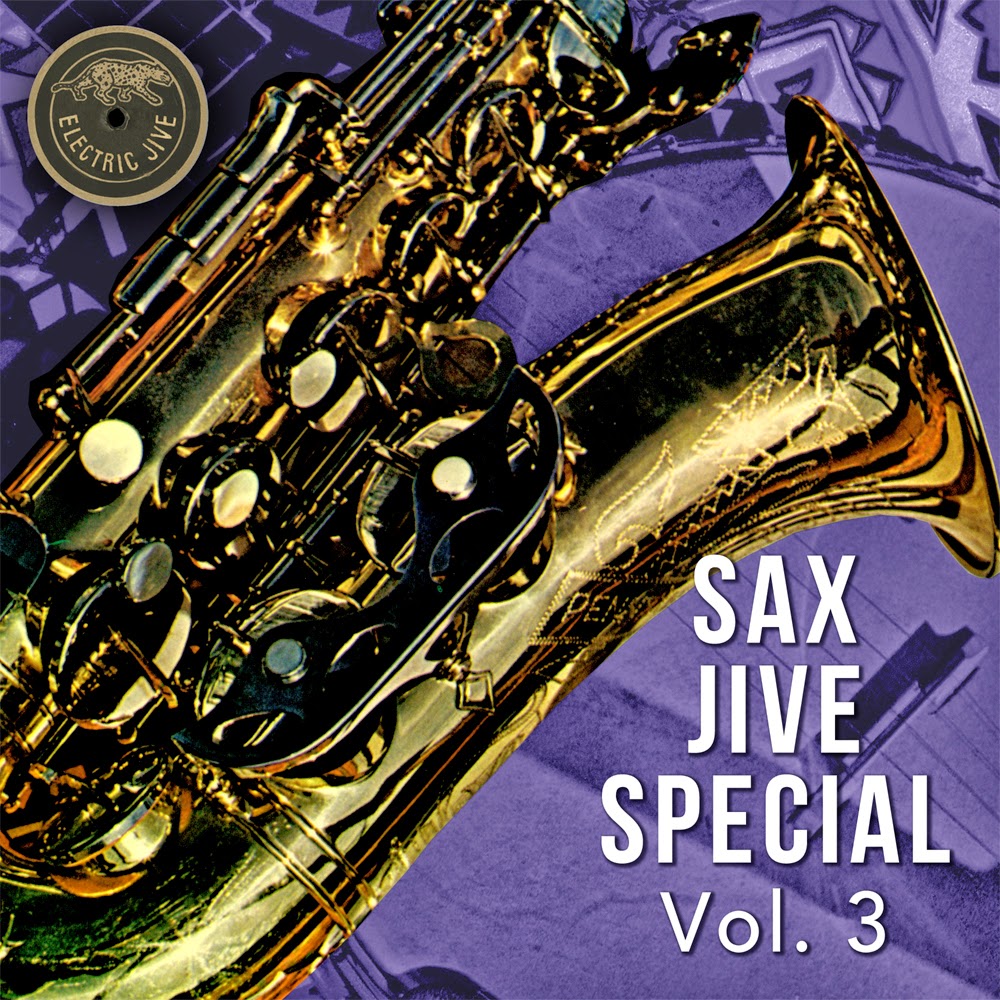
Sax Jive Special - Vol. 3

Following on from Accordion Jive Special – Vol. 1, we present the next in our series of South African jive specials. We’re sticking with the instrumental theme for now, and onto another popular form of dance music during the mbaqanga era. Sax Jive Special – Vol. 3 spotlights 20 more musical gems originally released on 45 rpm singles between 1965 and 1977.

Our opening tune “Hamba Phepha Lami No. 2”, a 1967 recording from the estimable Makgona Tsohle Band, is a remake of a huge vocal jive hit by the Mthunzini Girls. The original recording – featuring Windy Sibeko on lead vocals – was made just a short while before the sax jive reinterpretation, but was already making waves in Durban where broadcaster K.E. Masinga gave the tune regular airplay on the then-Radio Bantu operation. This was not an unusual situation: two other numbers in this compilation, “Tetemuka” (from Abafana Bama Big Bag – or the Big Bag Boys, as they were more commonly known) and “Izulu Liya Duduma No. 2” (another Makgona Tsohle Band masterpiece) had alternate vocal recordings that were hits of their own accord.
Alto saxophonist West Nkosi blows both his trusty horn and a melodica in “Hamba Phepha Lami No. 2”. It appears that there was a fashion for the melodica at the time, as the instrument pops up again in “Theogedi” – an atmospheric 1965 sax jive from Makgolokgolo, in reality a cover name for the same Makgona Tsohle Band – and in the intro to “Tetemuka”, featuring Sipho Bhengu on alto sax duties. Tom Vuma was the lead guitarist for Abafana Bemvunge, the band the backed the Mthunzini Girls who performed “Tetemuka No. 2”. In the early 1970s, Vuma left Mavuthela and moved over to EMI where he began honing a career as a producer, continuing to play his guitar on dozens of vocal and instrumental mbaqanga sessions. One of his sax jive numbers, “Shake Shake No. 500”, has a brilliantly pacey beat and loose sax phrases.
As with Monday’s compilation, I have a few favourites that I feel the need to single out: “Bye Bye” presents the Makgona Tsohle Band at their peak, with excellent rubber-thick melody from rhythm guitarist Vivian Ngubane. “Ezamabone” and “Taxi Driver” are the two numbers that represent the wild ‘jive mabone’ craze of 1973, both of which feature West Nkosi on alto sax but performing with two different instrumental outfits. “Taxi Driver” just edges it for me with its tough mabone drumbeat and rocking guitar rhythms. Another gem is the superbly swift “Hamba Nami”, credited to Big Mukwebo and His Home Boys. ‘Mukwebo’ refers to James Mukwevho – not the alto sax player but in fact the leader and bass guitarist of the Zwino Zwino Boys, the second-tier Mavuthela backup team (behind the first-tier Makgona Tsohle Band) that actually performs this number. (‘Zwino zwino’ is Venda for ‘now now’, denoting ‘ultra-modern’.)
Going back to West now and his 1972 recording “Intambo”, which is marvellous. It’s a beautifully melodic sax-and-accordion-jive tune with yet another of those brilliant spoken intros, which – as far as I can tell – sings the praises of a new Mavuthela recruit, groaner Paulus ‘Mgodlagodla’ Mabunda. Strange! Mavuthela boss Rupert Bopape provides an amusing spoken intro to “Stop Press” by Mathwalimbuzi, featuring ace musician Sello Mmutung fronting the Makgona Tsohle Band with his alto sax. As the 1970s wore on, the beats became harder and tougher – “Is Out Now” (by Albert Motha’s Amazulu Amnyama) and “Take Time” (by Fastos The Great, aka sax jiver David Khanyile) are from that late 1970s period which saw the final evolution of mbaqanga. Eventually the sound was completely usurped by a new mixture of jive, soul and disco.

A big thanks from me to Laurent Dalmasso for providing Electric Jive with 45 rpm transfers of “Intambo” and Shasha and Jackey’s “Makgona Tsohle”.

What are you waiting for? Download this mix and get your groove on! YEBO!! ☺

SAX JIVE SPECIAL – VOL. 3
COMPILED BY NICK LOTAY

01) MAKGONA TSOHLE BAND – HAMBA PHEPHA LAMI NO. 2 (1967)
02) WEST NKOSI AND HIS ALTO SAX – BYE BYE (1965)
03) MAKGOLOKGOLO – THEOGEDI (1965)
04) ABAFANA BAMA BIG BAG – TETEMUKA (1968)
05) MAKGONA TSOHLE BAND – IZULU LIYA DUDUMA NO. 2 (1967)
06) PAULUS MASINA AND HIS SAX – MADUNA (1969)
07) MAMBAZA NABAFANA BOMSHOSHOLOZO – HILLS OF JIVE (1971)
08) MAZEICKS – SHAKE SHAKE NO. 500 (1972)
09) ABAFANA BOMCIKICO – BAROTHO (1973)
10) WEST NKOSI NABASHOKOBEZI – TAXI DRIVER (1973)
11) MARKS MANKWANE AND HIS SHALUZA BOYS – EZAMABONE (1973)
12) BHENGU & BHENGU – EKHONENI (1972)
13) BIG MUKWEBO AND HIS HOME BOYS – HAMBA NAMI (1974)
14) WEST NKOSI NABASHOKOBEZI – INTAMBO (1972)*
15) SHASHA AND JACKEY – MAKGONA TSOHLE (1972)*
16) HAMILTON NZIMANDE – GIG 74 (1974)
17) MATHWALIMBUZI – STOP PRESS (1976)
18) AMAZULU AMNYAMA – IS OUT NOW (1977)
19) FASTOS THE GREAT – TAKE TIME (1977)
20) MARKS MANKWANE AND THE SHALUZA BOYS – N.Y. 4 (1976)

Download link: MF

VOL. 1 | VOL. 2

Monday, 1 December 2014

Tetemuka Jive (1969)


Welcome to December on Electric Jive! In my humble opinion, there can be no better way to kick off the festive season than with a seriously large dose of the greatest South African sax jive. Tetemuka Jive, released on the Inkonkoni label in 1969, collects 12 of the best mbaqanga instrumentals (originally released as singles) of the last 12 months.

At the time of this album’s release, Mavuthela Music – Gallo Africa’s black music production facility headed by Rupert Bopape – had successfully solidified its position as the most dominant African record label in the industry. This success was initially generated by a number of popular recordings from a line-up of female singers, later to be known as the Mahotella Queens, together with groaner Mahlathini and the Makgona Tsohle Band. The triumvirate recorded a frankly astonishing amount of hit singles during the 1960s in addition to extensive tours across the country to fulfil demand – so it was inevitable that the formidable and shrewd Bopape sought to replicate the success by forming a number of junior bands to follow in their footsteps.

Tetemuka Jive spotlights a couple of the more successful instrumental combos that Bopape formed to capitalise on the success of Marks Mankwane and company – Abafana Bemvunge (Boys of the grapevine) and Abafana Bama Big Bag (Boys of big bags). On this album, both teams provide the instrumental accompaniment to some of Mavuthela’s great sax jivers including Sipho Bhengu, Jack Lerole and Lemmy Mabaso. There are also two other numbers provided by the premier house band, Makgona Tsohle, in conjunction with premier sax jiver West Nkosi. This LP was the first issued on the Inkonkoni label, then the latest in a long line of Mavuthela labels (Motella, Gumba Gumba, C.T.C. Star Record, Smanje Manje… and so on). Though the term has since been adapted for other uses by the younger generation, ‘inkonkoni’ was at the time the straightforward Zulu term for 'wildebeest'.

It’s rare to come across an album of this style and vintage and find that every single track is nothing less than amazing. But I must admit to having a few personal favourites. “Tetemuka” (“Cruise along”) echoes some of the other sax jive singles of the decade including “Jive Mojikisa” and “Ice Cream and Suckers”, but this one must have been successful enough to warrant its appearance here as the title track and a follow-up recording, “Tetemuka No. 2”, from Izingane Zomgqashiyo (available on Indoda Mahlathini, Motella LMO 110). Big Voice Jack’s four numbers on Tetemuka Jive make remarkable use of other musical styles including tango, ska and soul. Marks Mankwane’s jive-tastic “Marks Special” started a huge craze and, with West Nkosi on alto sax and the rest of the Makgona Tsohle Band backing them up, he proceeded to record as many follow-up singles as possible over the next couple of years. But Marks’ “Pheladi” (“daughter-in-law”) is my absolute favourite and one can quite clearly hear the infectious beat eventually stir the band members up into a musical tizzy.

A huge, huge thanks to Manzo Khulu for providing the translations here.

Readers please stay tuned to Electric Jive this month for your usual end-of-year mixture of musical treats. I hope this one starts the party with an absolute bang! Enjoy!


TETEMUKA JIVE
VARIOUS
produced by Rupert Bopape
Inkonkoni LNKO 2000
1969
Sax Jive

Monday, 28 July 2014

Superb sax jive: Thala Thala (1971)


Electric Jive returns today to the delightful and infectious sound of South African sax jive. Thala Thala is a 1971 compilation LP that gathers together some of the biggest selling instrumental 45 rpm singles of the past year or two. The songs featured on this album are short, sweet, peppy and catchy - and if this LP doesn't get you up from your chair and dancing around the room, nothing else will! Thala Thala features a grand selection of sax jives (plus three accordion jives) from some of the greatest names of the era: Marks Mankwane & His Shaluza Boys, Sipho Bhengu & His Alto Sax, Big Voice Jack, Zwino Zwino Boys, Marubini and His Hot Shots, Mtabhane Ndima, and Noah Nduweni & His Sax. This album was released on the Inkonkoni label - which, at the time of release, was the most popular of the numerous Gallo-Mavuthela imprints.

The previous owner of this LP singled out Sipho Bhengu's "Tickey Dopies" and the Zwino Zwino Boys' "Tadima Tadima" as the two highlights with a black pen on the back cover. These two songs are certainly enjoyable (EJ readers may be aware that the former BBC Radio 1 DJ John Peel had a 45 rpm copy of "Tickey Dopies" in his vinyl collection) but, to my ears, there are several other songs on this LP that stand out much more than those two. Sipho's excellent sax jiving can also be heard in the rhythmic "Isaluti" that opens Thala Thala with a bang. "Auwa-Auwa", performed by Marks Mankwane & His Shaluza Boys, is quite frankly excellent. West Nkosi opens up the tune with a quick play of his harmonica (or "mouth organ") and Marks plays his lead guitar in that distinctive Marks way - but with the help of a wah-wah pedal. The two take turns soloing in this number (West solos on both the harmonica and his usual alto sax) and are backed effortlessly by the rest of Mavuthela's superb house band, the Makgona Tsohle Band.

Marks, West and the Makgona Tsohle Band return to perform "Marks Special No. 4". The band released "Marks Special" - a tune that showcased Marks' undeniably brilliant guitar skills - on single in 1969 and it was so successful that they recorded a follow-up titled "Marks Special No. 2". The third installment can be found on another Mavuthela sax jive compilation LP, Game 1 - Game 2 (1970). The fourth Marks Special here on Thala Thala spotlights Joseph Makwela's bass as much as it does Marks' lead guitar - Makwela actually plays the same iconic bass line he performed on the Mahotella Queens' smash hit single "Lilizela" a year prior. Vivian Ngubane's iconic rhythm guitar is strangely lost in the mix on "Marks Special No. 4" but it shines very much so on Mtabhane Ndima's "Emahlanzini", a repetitive but enjoyable early accordion jive from one of the masters of the style.

Vivian Ngubane was the first to set a template that other rhythm guitarists innovated upon. Marubini  Sam Jagome, inspired by Ngubane's wonderfully elastic rhythm line, developed his own personal and recognisable style. Marubini played both rhythm and lead guitar, creating a uniquely beautiful and almost wistful sound that became a trademark of the Zwino Zwino Boys, the junior Mavuthela instrumental team. The Zwino Zwino Boys featured an almost-exclusively Venda line-up ("zwino zwino" is Venda for "now now" - as in "ultra modern"!). Aside from the late Marubini on lead guitar, the Zwino Zwino Boys also featured his brother Christian Piliso Nombewu on rhythm guitar, Eddie Ndzeru on drums and leader James Mukwevho on bass guitar. Words cannot describe the great melodic back-and-forth of the title track, "Thala Thala", played to perfection by these ultra modern lads. Just take a listen and you'll understand!

Aaron "Big Voice Jack" Lerole had long since given up the strained groaning that shredded his vocal chords by the time he recorded the sax jive hit "Space Age" for Mavuthela. The title was no doubt inspired by the 1969 moon landings but the melody itself actually sounds like sax jive with a slight dash of salsa to me. We previously shared this sublime tune on our compilation Sax Jive Special - Vol.  2 - check it out now if you haven't already done so.

Thala Thala... 12 amazing instrumentals from the heyday of mbaqanga. What's not to love? Download and enjoy!


VARIOUS
THALA THALA
compiled by Shadrack Piliso and Wilson Silgee
Inkonkoni LPBS 4
1971
Instrumental

Tuesday, 17 June 2014

The Sound of Motella (1966)


Sometimes I wonder if I run against the grain of most record collectors in having a deep attraction for particularly damaged records. The album featured today is no exception. From an absent corner that must have provided sustenance for some small creature, to the beautiful water stain that runs across the back and visually approximates the north-western coastline of Africa—the cover by most accounts would be considered severely compromised... or as it would be listed on eBay... "G" for "Good"!


The condition of the vinyl, thankfully, is not as dire. Issued in 1966 on the Motella label, this compilation is the second long playing record published by Gallo's iconic Mavuthela stable following the debut: Meet the Mahotella Queens (LMO 101). The album brings together an eclectic range of early instrumental sax and harmonica jives, save for one track—Mayoyo—featuring female vocalists (perhaps Nick Lotay can help us out with identification). What more can be said about this iconic company that has not already been covered by Nick in his excellent posts here at Electric Jive and Matsuli. Do check these out!

As with most LPs from this period, the compilation features tracks previously issued on 78 rpm. While the track listing, oddly, does not reveal the artists' names, the images of the Motella labels on the front cover do; and so I have listed the details below:

01) Mario and his Khaila Alto — Jive March Time
02) Hlathi & Mahlathini — Khonza Egagasini (MO 43)
03) Marks Mankwane & His Alto Sax — Kap Kap Jive
04) Anania Wa Mfolo — Khula Anania (MO 63)
05) Jazz Manikiniki — Raai Raai (MO 55)
06) Jazz Manikiniki — Mayoyo (MO 75)
07) Jazz Manikiniki — Welcome 1966 (MO 74)
08) D. Makhekhe & His Sax — Qhude Manikiniki (MO 81)
09) D. Makhekhe & His Sax — Ginyitshe
10) Pyjama Party Band — Fukuzela
11) David Khanyile & His Alto Sax — Tha Tha U Thu Thuke
12) Jazz Manikiniki — Meropa Morago
13) Marks and His Alto Sax — Phalaborwa
14) Mario and his Khaila Alto — Jive Smodern Jive No.4


The Sound Of Motella (Town and Country)
Various Artists
1966
Motella, LMO 102

Monday, 2 June 2014

Sax Jive Special - Vol. 2

We're keeping this instrumental theme going for just a little bit longer here on Electric Jive. Why? Well, why not?! Sax jive happens to be one of the most peppy and sweet styles of instrumental dance music that has ever existed - and what better way of celebrating the genre than sharing with our readers another bumper collection of the very best sax jives? Following on from our last delve into the archives, we present to you Sax Jive Special - Vol. 2.

The Makgona Tsohle Band were the first guys on the scene in the 1960s to take the swing-style instrumental jive and reshape it into the more danceable, more electric and elastic mbaqanga beat which soared to amazing heights. If just one listen to real gems like "Umzinto", "Cowboy" or "Sithunyiwe Thokozile" doesn't at the very least get your foot tapping, then there's something truly wrong with your musical tastes. Under various recording pseudonyms, the men behind the Makgona Tsohle Band created the biggest instrumental hits of the day. That team - Marks Mankwane on lead guitar, Vivian Ngubane on rhythm guitar, Joseph Makwela on bass, Lucky Monama on drums and West Nkosi leading on alto saxophone - was the gold standard, the benchmark against which all other mbaqanga bands were measured.

The Makgona Tsohle Band didn't just back West - they were the Mavuthela house band who generally backed every one of the stable's saxophone players and vocal jive groups. Lemmy 'Special' Mabaso shot to fame as the child pennywhistler of the late 1950s - but by the 1960s, with kwela out and mbaqanga in, he turned to the alto sax and joined forces with Makgona Tsohle for a series of recordings that included "Sipho Special". You can clearly hear everyone in the studio feeding off each other's high spirits on this bouncy number.

Spokes Mashiyane, the man who brought sax jive to prominence, also joined forces with Mavuthela during the 1960s. It might be true to say that the great Mashiyane became sidelined and unappreciated as the style developed further and further into the more hard and bouncy mbaqanga, with the spotlight focusing instead on fresh young talent like West Nkosi, David Thekwane, Reggie Msomi, Boy Masaka and others. Mashiyane did continue to record sporadically though and did create some great sax jives with the Makgona Tsohle Band, such as "Kgwale". "Sediba" is also an enjoyable tune featuring Mashiyane on top form. The real star here though is Vivian Ngubane who bends the melody fantastically with his rhythm guitar. Ngubane, for some rather puzzling reason, seems to be generally forgotten compared to those he worked with such as Marks Mankwane and Joseph Makwela. This is all the more strange because Ngubane was nothing less than a trendsetter. His rhythm guitar, sandwiched between Mankwane's lead guitar and Makwela's bass, became the signature elastic bedrock of the music. Until Ngubane joined the Makgona Tsohle Band late in 1964, the rhythm guitar line was still being filled by an acoustic guitar player who strummed nothing more than simple chords. Ngubane's trademark sound opens "Umzinto", a good example of the staple instrumental mbaqanga that Makgona Tsohle pumped out of the Gallo studio every week.

Sipho Bhengu, before joining the famous Mango Groove and lending them his wonderful talents, was a supreme sax jive star of the 1970s. His "Welani Imifula" opens with a boisterous spoken word from Mavuthela's boss Rupert Bopape and then gives way to the musical backing of the Jets and Sipho's great sax rhythms. Another sax jive star was Selby Mmutung - better known to you and me as Bra Sello. Sello made his name playing with Abafana Bentuthuko and later joined Mavuthela, working with the late genius Mzwandile David to produce sax-accordion jives under the name Mathwalimbuzi. "Umsuzo" rather bizarrely refers to someone breaking wind and Sello certainly creates the right impression during the opening of the tune. Reggie Msomi was also a talented somebody. During the 1960s, Msomi and his Hollywood Jazz Band (usually comprising Reggie on sax backed by the talented Makgona Tsohle Band!) produced some rather adventurous instrumental hits - taking sax jive and mixing it with various other styles such as soul, ska or reggae. "Chumba" is a great tune with some hints of Congo rumba. Aaron Jack Lerole also turned and twisted sax jive and took it to newer heights. "Space Age" is simply amazing - just listen and hear for yourself.

The marvellous Zwino Zwino Boys, led by bass guitarist James Mukwevho, bring our compilation to a fitting close with the excellent "Thala Thala". This has to be one of my favourite sax jives of all time. Sam Jagome effortlessly kicks everything off with a few calm strums of his electric lead guitar. The rest of the band joins in and this combined force works up some truly magical rhythms. The late Sam has to be one of the forgotten geniuses of mbaqanga music. He followed Marks Mankwane's unique innovations and ended up creating a signature style all of his own. Sam's beautiful lead guitar strains could be heard not only in the Zwino Zwino Boys but also behind the spirited vocals of Izintombi Zomoya.

Our thanks to Laurent Dalmasso for contributing two wonderful tracks to this compilation from the original 78 rpm discs - "Sediba" and "Sipho Special". All you need to do now is download this mix and get yourself ready for some serious jiving until you drop.

ENJOY!

SAX JIVE SPECIAL - VOL. 2

01) PAKU PAKU - MAKHOLOKHOLO (1965)
02) SEDIBA - SPOKES AND HIS GOLDEN SAX (1966)
03) UMZINTO - LUCKY MONAMA AND HIS PARTNERS (1968)
04) CHUMBA - REGGIE MSOMI AND HIS HOLLYWOOD JAZZ BAND (1969)
05) SIPHO SPECIAL - LEMMY MABASO AND HIS SAX (1965)
06) JIVE SMODERN JIVE - MAKHOLOKHOLO (1965)
07) COWBOY - WEST NKOSI AND HIS SAX (1967)
08) TADIMA TADIMA - ZWINO ZWINO BOYS (1971)
09) WELANI IMIFULA - SIPHO BHENGU AND HIS JETS (1973)
10) MANYANE JIVE PART TWO - POPS AND SONS (1976)
11) PULL MAN NO. 2 - MARKS AND THE SHALUZA BOYS (1976)
12) UMSUZO - MATHWALIMBUZI (1976)
13) BATHATHE GEORGE - ABAKHWENYANA (1973)
14) KIT BAG - MAMBAZA NABAFANA BOMSHOSHOLOZO (1971)
15) FOUR MABONE - WEST NKOSI NABASHOKOBEZI (1973)
16) AMANZI AMANCANE NO. 5 - LUCKY MONAMA AND HIS PARTNERS (1971)
17) SITHUNYIWE THOKOZILE - MAKGOLOKGOLO (1967)
18) KGWALE - SPOKES AND HIS GOLDEN SAX (1967)
19) SPACE AGE - BIG VOICE JACK (1971)
20) THALA THALA - ZWINO ZWINO BOYS (1971)

Monday, 21 April 2014

Modern Sax Stars (1967)


I recently acquired a number of distinctly mellow mid-70s mbaqanga LPs by the Intuthuko Brothers and for today I had planned to post the earliest of those featuring Hansford Mthembu. But I came across a YouTube posting by alkis09 of Bra Sello with Abafana Bentuthuko where kayem11 had added a comment mentioning that Abafana Bentuthuko were also known as the Intuthuko Brothers. Of course I should have known... I recalled a 1967 CBS LP Modern Sax Stars featuring David Khanyile (Festus the Great), Bra Sello and Hansford Mthembu or (as the LP cover clearly notes) Abafana Bentuthuko.

Abafana Bentuthuko led by Hansford Mthembu were the backing band on a number of LPs for Bra Sello Mmutung. So for today's post I thought to focus on this earlier LP featuring the group, and cover their later 1970s material in future postings. You may be familiar with some of the tracks included here, 12-0-12 and Vala Nzimande were big hits for Bra Sello and Hansford Mthembu respectively, and are also featured on Nick Lotay's earlier post: Sax Jive Special. Bra Sello can also be heard here at EJ on Butterfly, and on the compilations DiscoSoulJive, and Pull Up! Sixties Jazz 78s.

David Khanyile (Festus the Great)
Bra Sello and his Band
Hansford Mthembu (Abafana Bentuthuko)
Modern Sax Stars
CBS
LAB 4002
1967

Monday, 10 February 2014

Sax Jive Special

It dawned on me a few days ago… why not devote an Electric Jive post to the groovy instrumental sounds that made black South African partygoers shake their hips on the dance floor in the 1960s? And so, here we are. Sax Jive Special throws you 20 classic mbaqanga instrumentals – all of which have to be played at full volume and must be accompanied by the listener jiving around the living room until they drop.

Yes indeed, sax jive was the dance music of choice in South Africa at precisely the same time that Beatlemania was sweeping the rest of the world. Nonetheless, this compilation begins with a rather subdued number performed by Abafana Bezi Mpalampala, led here by alto saxophonist Thomas Motshwane. “4 By 4” (possibly a nod towards West Nkosi’s earlier hit “2 By 2”) focuses mostly on gentle rhythms and musical harmony. Amabhungu Emvelo’s “Woza Nazo Vala” changes the cordial mood by a long way and takes us well and truly into a mad frenzy of guitar-sax-drum interplay. Hazekiel Mazibuko certainly knows his way around a saxophone. It’s hard not to feel stimulated by this track!

Abafana Bezi Mpalampala returns for one more song that stirs in a spoonful of soul magic. “Blackstick Soul” proves its hipness with a trendy, modern keyboard solo when the saxophonist puts down his horn in the middle of the tune. It’s certainly a groovy song. Before one has the chance to get carried away with all this soul stuff, in step the Makgona Tsohle Band to tell us how true, grassroots studio jive is performed. Vivian Ngubane’s genius rhythm guitar introduces “Mafeking Platform 12” calmly, and Marks Mankwane – without missing a trick – gets right down to business by scratching out that trademark fast-paced lead guitar sound. We step a couple of years ahead to hear an emphatic, driving rhythm created by the peculiarly named artist Bhengu & Bhengu. What we do know is that the brilliant Sipho ‘Sammyboy’ Bhengu is on alto sax here, with Nunu Luphoko on rhythm guitar. Then, we step another couple of years backwards to hear a classic sax jive from the master, West Nkosi, backed as usual by the brilliant Makgona Tsohle Band. Although West is on top form here, the standout musician has to be Joseph Makwela who just plucks that electric bass like there’s no tomorrow.

West Nkosi was a sax jive star – but then again, so was Selby ‘Bra Sello’ Mmutung. “12-0-12” was a huge hit for Bra Sello in 1967, so much so that Izintombi Zesi Manje Manje did a vocal jive cover of it entitled “Ingwe Idla Ngamabala”. Bra Sello created a long stream of funky, soul-infused sax jive for a number of years before retreating to the more comfortable and familiar traditional formula in the mid-1970s. It was nothing spectacular, but you just find yourself getting lost in the frenetic melody of tunes like “Mancintshana”. There were other saxophone stars too, such as Teaspoon Ndelu. His “Miss Durban” is a hell of a tune. Noise Khanyile, that legendary studio violinist, bulks up the instrumental team that jives undeterred as Teaspoon hits the highest registers of his alto sax.

Sax jive was perhaps at its most fertile during the late 1960s – and in recognition of this, we again recoil and return to the earlier time period after a number of 1970s instrumentals. Amabhungu Emvelo steps back into the limelight to play another hit of the day, “Impalampala Outside”. But it’s down to Abafana Bentuthuko to close the show – and a fine job of it they certainly do, playing their mid-tempo “Tycoons No. 2”.

Many thanks to Chris for allowing me the use of “Matamato Jive Matamato” – and also thanks to regular EJ reader Manzo Khulu for sharing with us his out-of-print copy of Bra Sello and Abafana Bentuthuko’s greatest hits.

Now download, play at full blast and do your thing, man!

SAX JIVE SPECIAL
COMPILED BY NICK LOTAY

01) 4 BY 4 – ABAFANA BEZI MPALAMPALA (1969)
02) VIKA WETHU – ABAFANA BE MVUNGE (1968)
03) WOZA NAZO VALA – AMABHUNGU EMVELO (1967)
04) VALA NZIMANDE – ABAFANA BENTUTHUKO (1967)
05) BLACKSTICK SOUL – ABAFANA BEZI MPALAMPALA (1971)
06) MAFEKING PLATFORM 12 – LUCKY MONAMA AND HIS PARTNERS (1967)
07) PRETORIA TYCOONS – FESTUS THE GREAT (1967)
08) MA UJIKA – BHENGU & BHENGU (1972)
09) MATAMATO JIVE MATAMATO – JOSEPH MAKWELA AND HIS COMRADES (1967)
10) 12-0-12 – BRA SELLO (1967)
11) KHANYISA MARKS – MARKS MANKWANE AND HIS SHALUZA BOYS (1973)
12) RED STOEP – ROGER AND HIS BIG SOUNDS (1972)
13) VIA FARADAY – FASTOS THE GREAT (1977)
14) MISS DURBAN – TEASPOON NDELU AND HIS “T” BOYS (1973)
15) JIVE MABONE JIVE – SHADRACK PILISO (c.1973)
16) MOPIE SPECIAL – UMKHIZE OMCANE (1967)
17) MANCINTSHANA – MATHWALIMBUZI (1976)
18) MAGIRIGIRI – WEST NKOSI & HIS ALTO SAX (1969)
19) IMPALAMPALA OUTSIDE – AMABHUNGU EMVELO (1967)
20) TYCOONS NO. 2 – ABAFANA BENTUTHUKO (1967)

RS / MF

Monday, 26 August 2013

Game 1 - Game 2 (1970)

This isn't a groundbreaking album. But there is something quite attractive and endearing about it, from the striking cover art to the tasty, bouncy sounds gracing the grooves of this record. Like hundreds and hundreds of LPs released in South Africa during this particular era, Game 1 - Game 2 is a compilation of 12 songs from previously-released singles, comprising some of the best sax jive material of the last year. In other words - this is instrumental mbaqanga heaven.

The tunes on Game 1 - Game 2 are short, sweet and peppy - and why would one want anything more than that...? Alto saxophonist Sipho Bhengu launches the album on a bright and happy note, and he is joined immediately by the rest of the members of the Mavuthela studio band Abafana Bezimpalampala. "Inselelo" is a simple tune but, like every other song on the LP, very infectious. Bhengu, who recorded under such memorable pseudonyms as "Sammy Boy and His Sax", "Sipho and His Jets" and "Sammy Boy Nezimpisi", features in three other songs, including "Black Stick Soul", a lovely soul-type number with florid late-60s organ.

There's another soul-influenced tune on the LP, "Jungle Soul" (one of my personal favourites), as recorded by Joseph Makwela and His Comrades - yet another 'black music'-era smokescreen for the musicians of the Makgona Tsohle Band. For those wanting the sound of the original sax jive formula though, not to worry - there's plenty of that on Game 1 - Game 2, and it's seriously good stuff. Makwela and his Makgona Tsohle bandmates turn up again for "Umgqizibo", another 'little but big' tune. Marks Mankwane's hugely popular "Marks Special" series of songs isn't forgotten either, with No. 3 represented on this LP, featuring the sound of his legendary lead guitar alongside the groundbreaking Makwela on bass, the excellent (and often forgotten) Vivian Ngubane on rhythm guitar, and the rhythmic brilliance of Lucky Monama on drums.

...and speaking of Monama, let us not forget about the back-and-forth amazingness of "Phakama Masuku", a great number recorded by Lucky Monama and His Partners (yes, the Makgona Tsohle Band under yet another different name!)

There is one other tune, "Chumba", recorded by Reggie Msomi and His Hollywood Jazz Band - a fabulous number that shouldn't be missed.

Game 1 - Game 2 - a veritable melting pot of staple sax jives. Enjoy!


VARIOUS
GAME 1 - GAME 2
produced by Rupert Bopape
Smanje Manje LSJM 1002
1970
Instrumental

RS / MF

Monday, 10 June 2013

Lemmy Mabaso - Lemmy Hit Parade No.1 (1962)


This post will be my last for a while at Electric Jive. I am taking some time to concentrate on a number of other creative projects. I want to thank the team here at EJ for inviting me two-and-half years ago to be a part of this amazing resource. Much of South African music history remains undocumented and significant information is rapidly fading away. Electric Jive continues to provide a critical window onto that history and I am honored to have played a small part in this valuable archiving project. Chris, Matt, Nick and Francis thank you so much!

For this final post I though it might be appropriate to feature two LPs from Gallo’s New Sound label: Lemmy Hit Parade No. 1 (NSL 1008) and Top Hits of the Big Three (NSL 1006). Both are exceptionally hard to find and seldom, if ever, come up on the various auction sites.

Gallo introduced the New Sound label in 1958 as a marketing strategy to brand their more popular jive and kwela releases. It set those recordings apart from their own more “traditional” ones and became a visually catchy product that could rival the competition. The familiar vermillion and yellow label was a bright, modern shift away from the more conventional black, gold and silver label designs of the preceding decades. (For more on the New Sound label check out my provisional discography at flatint.)

The label showcased some of Gallo’s most popular jive and kwela artists of the late 1950s and early 1960s including Lemmy 'Special' Mabaso, Spokes Mashiyane, Miriam Makeba and the Skylarks, Reggie Msomi to name but a few. Significantly this label was introduced just as Gallo was signing Mashiyane away from Trutone and it also arrived as the popularity of kwela was peaking internationally. The timing in my opinion cannot be coincidental.

The label, like the music, was bright and easily identifiable. Early issues carried the name Gallotone in a modern san-serif font (the previous logos were all in cursive) but this too was dropped in favor of the clean simplicity of just “New Sound” next to the Gallo rooster logo.

At first the design was used only on 78 rpms, which at that time were chiefly marketed to black consumers. In 1959, some discs were issued as 45 rpms, and in 1960 the company began a series of LPs and EPs featuring some of their best artists. It is likely that these formats were to be marketed to white consumers. New Sounds of Africa, Vol. 1 and Vol. 2 were the first two LPs issued and included primarily tracks by Spokes Mashiyane but also significant hits by Miriam Makeba and the Skylarks. Coincidentally these came out just as Makeba was becoming popular in the United States — she had left South Africa in August of 1959.

The label continued with a string of LP releases featuring Mashiyane, Mabaso and Msomi and then in 1962 issued the classic live recording of the 1962 Cold Castle National Jazz Festival. Generally Gallo issued jazz recordings on their Continental label, but this LP marked an important departure. This was soon followed by an even more significant classic in Jazz - The African Sound featuring Chris McGregor’s Castle Lager Big Band - one of the most collectable South African records.

New Sound maintained issues until around 1965 when it was replaced by Mavuthela's iconic Motella label under the stewardship of Rupert Bopape. Introduced in 1964 soon after Bopape joined Gallo, Motella became home to the leading South African musical styles of the late 1960s. Mavuthela followed up with other new labels including Gumba Gumba, CTC Star, Smanje Manje and so on.

The two LPs featured today both include tracks by Lemmy 'Special' Mabaso who, in the late fifties along with Spokes Mashiyane, was South Africa’s biggest kwela star. As with all New Sound issues till this point both LPs are compilations of recordings previously issue on 78 rpm.

Mabaso was born in Alexandra Township in 1946 and along with his brothers Jerry and Meshack and three friends formed the Alexandra Junior Bright Boys, a four penny-whistle group accompanied by string-bass and guitar. They would busk the streets of Johannesburg for tips before making their first recordings probably around 1956 or 1957. Mabaso must have been ten or eleven at the time. (Huskisson)

The Alexandra Junior Bright Boys with Mabaso became some of the first black artists in South Africa to be featured on a long playing vinyl record in the 1958 compilation Something New in Africa (GALP 1015) and then again that year on the 10” LP Lemmy Special (GLP 119), both on the Gallotone label. By this point Mabaso must have been twelve.

Lemmy Special, as he is known on many of the recordings, became an overnight sensation and soon found himself performing in some of the biggest stage shows of the day, including African Jazz (1957) and both local and international stage productions of King Kong. After the decline in popularity of kwela he shifted to saxophone in 1963 and joined Reggie Msomi’s Hollywood Jazz Band before forming his own group, the Down-Beats. (Huskisson)

Mabaso continued recording for Gallo well into the 1970s and can be heard playing saxophone on many albums, including Ntemi Piliso’s classic 1975 sessions with the Members. Do yourself a favor and search for Lemmy here at Electric Jive to see the many other LPs he is featured on.

See you later!

Lemmy Hit Parade No. 1
Lemmy Special
New Sound
NSL 1008
(1962)


Top Hits of the Big Three
Spokes Mashiyane, Lemmy Mabaso, Reggie Msomi
New Sound
NSL 1006
(1961)


Monday, 3 September 2012

The Top 14 - Sax Jive & Kwela (1960 - 1964)


Today we feature a great transitional LP that sits somewhere between the late majuba jazz sounds of the 1950s and the very early mbaqanga perfected by the team at Mavuthela in the mid 1960s. Many of the key architects of that Mavuthela sound — West Nkosi, Reggie Msomi — are featured on this album and in some respects this album could be viewed as a precursor to the coming stylistic phenomenon.

Certainly the debt to the swing-based majuba (African Jazz) big band sounds of the 1950s is undeniable on this record. With hints of ska and swing, I would define the bulk of the tunes as "sax jives" though also included are four flute-based kwelas.  The two styles are historically linked and had been ever since Spokes Mashiyane exchanged his flute for a saxophone in 1958 and began playing sax-based kwelas. Missing from the album though is that elastic electric baseline that so typified the mbaqanga sound... and that can be heard on two slightly later compilations featured here at Electric Jive: Lets Move with Makhona Tsohle Band (1967) and Taxi Jive (c1965)

Issued in 1964, The Top 14 does appear to be GRC's first LP release on the Tempo label. The album, like many others during this time, comprised of tracks previously issued as 78 rpms with recording dates probably ranging from 1960 to 1964.

David Thekwane
This compilation includes six tunes by, saxophonist, David Thekwane — aka Velile the King — who would go on to become a major producer for Teal records in the 1970s. As a young penny whistler in Pimville, Johannesburg, Thekwane came to the attention of talent-scout Strike Vilikazi who brought him on as an assistant and salesman at Trutone Records in 1955. Thekwane's first group was the Mofolo North Stone Breakers but after taking up the alto-sax continued recording under a number of different pseudonyms including Mr. Dube, Velile the King, Baby Face, etc. On this album he performs with or as Velile the King of the Tap Steps, the TV Septet and the Black Night Hammers. According to Yvonne Huskisson, Thekwane moved to Teal as a producer in February, 1969 though Rob Allingham has it as 1972. Nevertheless one of his biggest selling groups at Teal were the iconic Movers and he was producing their records as early as 1970. Allingham also suggests that Thewane intimidated many of his musicians with physical violence — an interesting detail enhanced by Huskisson's last note that his favorite hobby was boxing.

West Nkosi also performs here under two pseudonyms — "West and Sax Boy" and Western Boys — featuring amongst others, himself and Lazarus 'Kid' Moncho.

The album also includes the track Walk to Dube by the Snqamu Jazz Band which was later reissued on the compilation: Township Swing Jazz Vol. 2 compiled by Rob Allingham. Allingham’s notes on the CD set the recording date for this particular tune as September 27, 1960 and the band personal as: Thami Madi on 1st alto, Christopher Songxaka on 2nd alto, Paul Rametsi on tenor, Jordan Bangazi on trumpet, Reggie Msomi on guitar, Saul Manikela on banjo, Johannes 'Chooks' Tshukudu on bass and Louis Molubi on drums. (With solos by Jordan Bangazi and Paul Rametsi.) Remarkably the line-up here comes closes to Spokes’ Mashiyane’s Big Five at Gallo which is not unusual considering that GRC was a subsidiary of Gallo's.

GRC itself, though initially a separate company, had a relationship with Gallo where they shared the same recording studios hence the common ABC matrix numbers. At some point the two companies would eventually merge to become Gallo - GRC.

As with issues on 78 and 45 rpm, the Tempo label on The Top 14 LP is consistent with the first design showing a trumpet on yellow and blue. In 1966 the label was sold to Trutone where the design remained the same for some issues, but was eventually redesigned with the familiar black and green pictured above.

To read the liner notes or view the track listing, check out the album here at flatinternational.

Various Artists
The Top 14
Tempo
LKT 701
issued 1964


Monday, 14 May 2012

Jump and Jive with West Nkosi (1967)

Today we feature the very first “solo” long playing record by the legendary saxophonist, composer, producer and, later, executive for Gallo records — West Nkosi — a major figure in the South African recording industry for more than three decades.

As a member of the famed Makhona Tsohle Band in the early 1960s, Nkosi help develop the sound of sax jive and subsequently the style of mbaqanga. As a producer he signed and recorded classic groups like Ladysmith Black Mambazo as well as Mahlathini and the Mahotella Queens.

Jump and Jive with West Nkosi, completes what I like to call the early Mavuthela trilogy — the other two albums being Meet the Mahotella Queens (1966) and Let’s Move with the Makhona Tsohle Band (1967), both on the Motella label.

Issued in 1967 on Gallo’s USA label, Jump and Jive does appear to be Nkosi’s first LP record. Though, like the other Mavuthela releases mentioned above, it is a compilation of material previously issued on 78 rpm. I suspect the recordings here range in date from around 1964 to 1967. The cover image of Nksoi has been featured on a number of websites, but remarkably, the source of that image, the original album itself, has not.

In preparing this post it was more than evident to me that no one could be more qualified to talk about Nkosi that my colleague Nick Lotay, who has covered the artist extensively in a range of posts first at Matsuli and now here at Electric Jive.

For this post, Nick has kindly allowed me to sample his various texts in order to string together a narrative for Nkosi. Nick, I am indebted, many thanks!

In many ways Nick’s 2009 post Jive Motella! at Matsuli is for me the gold standard for well-researched, informative blogging and it is from his essay that we open the West Nkosi narrative:

“The vital core of Mavuthela’s roster arose as amateur musicians during the mid-1950s, and the story begins with Joseph Makwela. [...] At the age of 16, Makwela moved to Pretoria on the lookout for work. He eventually became a domestic worker in a white suburb, and encountered by chance another gardener called Lucky Monama. [...] Monama got on well with Makwela and soon they became firm friends, learning that they worked only a short distance from each other. During an off-hour at the end of the week, they spotted a pennywhistler performing at a sports ground, Johannes Hlongwane. Hlongwane was born in 1940 in eMathafeni, just outside Nelspruit. At the age of 16, after leaving school, the music-loving Hlongwane was sent to live with his grandfather in Pretoria to find work. After he gained enough money to buy a pennywhistle […] Hlongwane began to make a name for himself on the streets of Pretoria by performing outside bus stations, at bus stops, and outside stadiums, inspired by his idol Spokes Mashiyane. After seeing the animated Hlongwane, Makwela and Monama bought their own pennywhistles and sought harmony advice from him, in awe of his precision music playing (and the high amount of money that he had garnered from onlookers). Shortly afterwards, the three lads formed The Pretoria Tower Boys. Three more members were soon added and Makwela replaced his whistle with a guitar.

The [PT] Boys would, on occasion, come upon a rival pennywhistle group led by guitarist Marks Mankwane. The Boys would often marvel at his meticulous and rhythmic tunes and Hlongwane noted to himself that Mankwane was a very talented musician to look out for. […]

By the start of the 1960s, each member wanted to try their luck as professional musicians. Hlongwane decided to change his name to West Nkosi. Nkosi and Monama were the first: they moved from Pretoria to Alexandra in late 1960, where Nkosi again played pennywhistle tunes on the streets – Monama backed him up on guitar – enthusiastically waiting to be spotted. A talent scouting expedition from [Gallo] saw the two boys moving to Johannesburg and Nkosi joining Gallo’s kwela studio group: Spokes Mashiyane & His All-Star Flutes. However, [Nkosi’s] time with them was brief, as he wanted to develop his own career as an individual performer.

Monama decided to remain at Gallo as a session musician and permanently abandoned his pennywhistle, opting to become a rhythm guitarist. Nkosi once again moved on, ending up joining another studio group called the Bon Accord Boys. The fame that they acquired affected Nkosi deeply, who wanted a reputation as a brilliant soloist.

This saw a move back to Jo’burg’s city centre in 1962 and back at the famed Gallo studios, this time with Joseph Makwela, for a second try. The two lads ended up performing as a duo outside the legendary building. They had at this point switched instruments: Nkosi replaced his pennywhistle with a saxophone after realizing that the pennywhistle had quickly gone out of fashion, and Makwela […] became the first black electric bass player in South Africa. Reggie Msomi was sufficiently pleased by the performances, having seen them on his way in and out of the Gallo studios.

The two men were recruited by Msomi into his stellar marabi line-up the Hollywood Jazz Band [led by Msomi] and were subsequently reunited with Lucky Monama – who, at this point, was already the rhythm guitarist in the band. Msomi was impressed with Nkosi, and gave the performer a second role at Gallo as a solo artist. Nkosi’s professional career effectively began. Some minor success occurred before Msomi heard that Gallo was not showing good profits in their black music production. He decided to take the new lineup of the Jazz Band on a tour, this time to up north to Rhodesia, hoping that he would gain decent revenue from the live appearances and recordings of the band for the company. […]

The company took Msomi’s unexpected departure as an opportunity to replace him. They managed to entice the massively successful Rupert Bopape [from EMI] and Mavuthela was born. Msomi was furious at Gallo replacing him behind his back, but he was persuaded by management to remain at the company with promises to become a possible co-producer […] in the new Mavuthela subsidiary.

When West Nkosi, Joseph Makwela and Lucky Monama finally returned to Gallo in the middle of 1964, they found that, in the re-organisation of the company, Bopape had fired most of the old musicians. One of the new recruits to the new Mavuthela roster was none other than Marks Mankwane, who had been […] at Troubadour Records […].

West Nkosi began pleading with Bopape to let him record as a solo artist on the new Mavuthela roster, just as he had done under Msomi, but Bopape – needing new musicians and having received word from Msomi that Nkosi was one musician from the old Gallo unit that didn’t deserve to be fired – instead put him in a group of backing saxophonists (the four horn blowers in the foreground during Mavuthela’s infancy were Shadrack Piliso, Elijah Nkwanyana, Zeph Nkabinde, and Christopher Songxaka) and started churning out the necessary vocal/sax jive output he had done at EMI.

The first few Mavuthela recordings were simple instrumental sax jives with a ‘call and response’ nomenclature. Depending on the pseudonym, one of the saxophonists would call with his instrument. He would be responded with a team of saxophones played by the other horn blowers on the early roster – with all important accompaniments from Mavuthela’s house band: Mankwane’s high-pitched electric guitar skills, Makwela on his deeply-plucked bass, Monama on acoustic rhythm guitar, and Wilfred Mosebi on brushed drums. The music itself built heavily on the mbaqanga […] sound. The deep electric bass pulsation and concentrated uptempo electric guitar was an irresistible complementation and as such held the entire melody together.

West Nkosi asked Bopape if it was possible to audition now that Mavuthela was up-and-running. Bopape agreed. Nkosi, together with Mankwane, Makwela, Monama and Mosebi, performed a sax jive tune that he had composed some months prior. Bopape was impressed by this performance, and as a result, Nkosi was made a solo act – under the name West Nkosi and His Alto Sax – and recorded his first tune: “Orlando Train”, the song he had performed in his audition.

Bopape formally organised the Mavuthela house band and later penned the Sesotho name ‘Makhona Tsohle Band’ (The Band That Can Do Anything) in reference to the skills of his musicians. Bopape organised for the band to perform at local gatherings to promote the Mavuthela division, which began its fruitful productive career releasing its product on the existing “Gallo-USA” and “Gallo New Sound” labels, and the newly-formed “Motella” label. The instrumentalists were very well-received with their new “electric jive” sound and success was to follow.

A huge slice of the black public became fairly fanatical about this new musical craze and the “Motella” name soon gained currency. The easygoing Marks Mankwane was to become a key musical arranger, whilst the more open and enthusiastic West Nkosi found a mentor in Bopape. Bopape educated Nkosi, an aspiring producer, on the rigid studio system, and gave Nkosi a stable role as a solo performer. Nkosi was happy in his permanent position of employment in Johannesburg, not least because it gave him a chance to make a name for himself and at the same time remain with his beloved wife Thami and newborn baby."

"The rest of the 1970s saw some more membership changes, and promotions – Mankwane and Nkosi were now producers, as was Lucky Monama (Monama was now also Mavuthela’s Public Relations officer). Makhona Tsohle subsequently disbanded around 1979 due to producer responsibilities, though did carry on as session musicians, reuniting in 1983 for their own (highly successful) television show, Mathaka (Friends) […]."

"Nkosi’s headstrong attitude to life thrust him further and further into the spotlight as time went on [...]. When the order came from Gallo’s management to increase production, Nkosi was one of the first to be honoured by Bopape with a producing role in 1972.

Nkosi was the ultimate champ and all-round good guy in front of Bopape, the big boss of the studio. But privately, one might say West thought Bopape was ill-suited to the music business: in an interview many years after Bopape’s retirement, Nkosi spoke about sitting down with his boss in the rehearsal rooms at Gallo and watching artist after artist audition for a contract. Though Nkosi could feel the potential in these musicians and singers, Bopape was the boss and had to have the final say – and often turned down the ones who Nkosi privately felt had the talent to prosper. His promotion to producer gave him the chance to have his decisions adhered to – and, in many cases, spotlight a talented act that, under Bopape, would never have shone.

When West Nkosi came to Durban to search for a local male group whose cothoza mfana vocal styling had captivated everyone listening to Radio Zulu, he struck gold. He brought Ladysmith Black Mambazo in a Gallo minibus to the Johannesburg studios, where welcome faces and pats on the back greeted them. All except for Rupert Bopape, of course! Joseph Shabalala, the enigmatic founder and leader of the group, recalled in a late 1990s interview that Bopape was hesitant of signing the then-seven members to Gallo-Mavuthela. “He was hesitating about it,” remembered Shabalala. “He said, ‘there are groups like the King Star Brothers… we record them and black people don’t buy their music! It’ll be the same thing for these guys!’” West Nkosi insisted that these guys were so much more talented than any of the others. The hesitation continued for a while – but luckily, Bopape’s wife Irene Mawela happened to be in the studios that day and asked who these singers were. When told of the group’s name, she immediately recognised them from the constant Radio Zulu airplay – and insisted that they be signed up. West noted her approval and Bopape duly agreed. Ladysmith Black Mambazo began recording in August 1972 and, by the end of the decade, had become the biggest selling group in the country’s history.

Alongside producing several more immensely popular acts, West Nkosi continued recording instrumental hits too: in the line-up West Nkosi Nabashokobezi (which included guitarist Marubini Jagome, bassist Jabu Zulu and drummer Eddie Ndzeru), he focused mainly on peppy sax jive tunes and recording many, many numbers in the ‘mabone’ series. With his longtime musical acquaintances in the Makgona Tsohle Band (also credited as the Makhona Zonke Band on several 1970s records), Nkosi also did sax jive but that bit more extravagantly, as well as later branching out into bump jive and soul."

"In 1973, the studio group West Nkosi Nabashokobezi worked up a sensational mbaqanga beat that just had to be recorded. Released on the FGB Producers label in 1973, the hit single “Two Mabone” (two car headlights) defined that alignment with the US. The single became a huge hit within South Africa, quickly attaining gold status – the tune was so popular that Gallo Africa issued it for international release via London Records in the US. Before long, jive Mabone – referring to the headlights of the Impala – became the in-thing. A long string of recordings by various sax jivers all helped to keep the trend alive for some two or three years. […]"

"[…] Following Bopape’s 1977 semi-retirement, Nkosi carefully encouraged his own influence with Gallo’s board of directors – using the influential advice that Bopape gave to him – and not only became head of production in the stable, but the first black man to be appointed to the board of directors at Gallo Africa (in 1982)."


In August 1998, Nkosi was paralyzed in a car accident, and died from his injuries two months later, at the age of 58. 

Many thanks again to Nick Lotay for allowing me to sample his texts on Nkosi for this narrative.

West Nkosi
Jump and Jive with West Nkosi
1967
USA
L-USA-2


Monday, 20 February 2012

2 Mabone (1973)


1970s South Africa developed a taste for everything American. In fact, one could argue that black South Africans have always looked towards the African-American scene for inspiration and influence - but particularly into the 1970s, together with the afros and platform shoes, the Chevy Impala became something of a key image for the urban, modern city dwellers.

In 1973, the studio group West Nkosi Nabashokobezi worked up a sensational mbaqanga beat that just had to be recorded. Released on the FGB Producers label in 1973, the hit single “Two Mabone” defined that alignment with the US. The single became a huge hit within South Africa, quickly attaining gold status – the tune was so popular that Gallo Africa issued it for international release via London Records in the US. Before long, jive Mabone – referring to the headlights of the Impala – became the in-thing. A long string of recordings by various sax jivers all helped to keep the trend alive for some two or three years. It may be something of an irony that this typically, uniquely African beat displayed the increasing Westernisation of black people living in the cities of South Africa.

The obscure long-playing record 2 Mabone, released on the FGB Producers label in 1973, comprises 12 ‘headlight’ offerings by various Mavuthela combos.

Mavuthela did begin the trend with “Two Mabone”, but were by no means the only black music production company to peddle it to the public. Lulu Masilela, backed by Teal Records' effervescent Boyoyo Boys, recorded “Three Mabone” in anticipation of the great sales that the original recording had received. West Nkosi Nabashokobezi recorded “Four Mabone”, while violinist Noise Khanyile and His Violin gave “Five Mabone”. The Big Bag Boys, led by alto saxophonist Elias Shamba Lerole, gave the public the peppy little “6 Mabone”, but was perhaps blown out of the water by Lulu Masilela’s soulful stomping “Six Mabone”, which became a big hit. Nonetheless, West Nkosi hit back with the great “Seven Mabone”, which added accordion rhythms into the mix. The tunes came fast and thick from all of the major black labels and producers including Thekwane, Bopape and Nzimande... and it was by no means a given that once somebody had recorded “10 Mabone” that the next tune must be “11 Mabone”. In fact, “12 Mabone” superseded “Seven Mabone” and then was followed straight after by “17 Mabone”… the highest number (to our current knowledge) was “Jive Mabone 800”, recorded in 1974 by studio artist 'Mr. Singo'. We can safely assume that there were not 799 Mabone tunes recorded before we got to that one (!) But indeed, just the use of the word "Mabone" was enough to capture the eyes of people (see last week's post from Chris for a nice example). David Thekwane instituted a Teal label named 'Six Mabone' after Lulu Masilela's big hit, and Teal's popular soul outfit The Movers did their own great version of the tune which, in true Movers style, sounded nothing like straight-up mbaqanga!

Not all of the tunes on this "collector's album" (as the liner notes of West Nkosi's Sixteen Original Jive Hits describes it) contain “Mabone” in the title, but all of them are certainly performed in that classic jive Mabone style. Every tune has its moment, but highlights away from the “… Mabone” titles include “Shiluvani”, “Marabi Bell 800”, and “Tonkana”. If you’re a fan of violins – and shouting voices – then I’m sure this album is for you…!


Enjoy!

2 MABONE (Various artists)
FGB Producers LPBS 17
1973

1. TWO MABONE – WEST NKOSI
2. SHILUVANI – BIG BAG BOYS
3. MARABI BELL “800” – WEST NKOSI
4. FIVE MABONE – NOISE KHANYILE
5. ZOLA-MNDENI – WEST NKOSI
6. POKOLO SPECIAL – MARKS MANKWANE
7. FOUR MABONE – WEST NKOSI
8. SIX MABONE – BIG BAG BOYS
9. UMTHAKATHI “500” – WEST NKOSI
10. BRA JOE – NOISE KHANYILE
11. PLATFORM “17” – WEST NKOSI
12. TONKANA – MARKS MANKWANE

RS / MF