Showing posts with label Mathwalimbuzi. Show all posts

Thursday, 16 April 2015

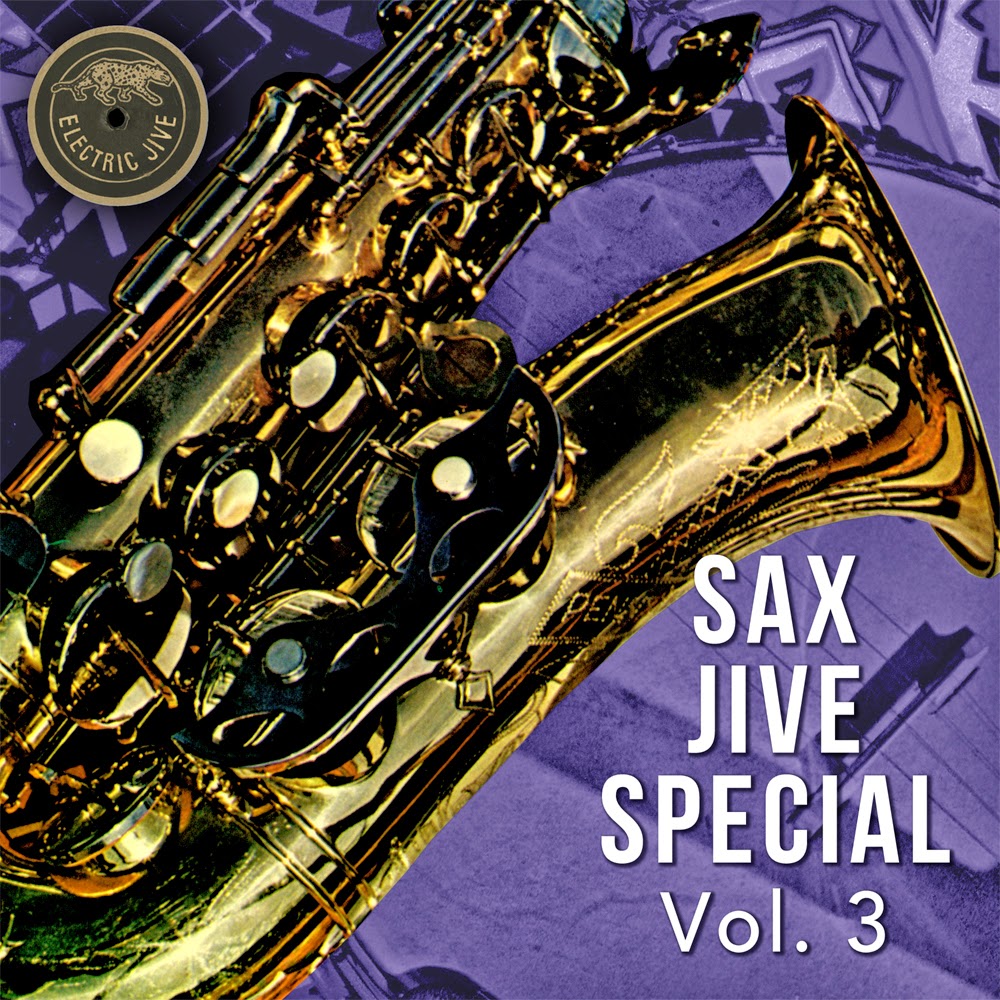
Sax Jive Special - Vol. 3

Following on from Accordion Jive Special – Vol. 1, we present the next in our series of South African jive specials. We’re sticking with the instrumental theme for now, and onto another popular form of dance music during the mbaqanga era. Sax Jive Special – Vol. 3 spotlights 20 more musical gems originally released on 45 rpm singles between 1965 and 1977.

Our opening tune “Hamba Phepha Lami No. 2”, a 1967 recording from the estimable Makgona Tsohle Band, is a remake of a huge vocal jive hit by the Mthunzini Girls. The original recording – featuring Windy Sibeko on lead vocals – was made just a short while before the sax jive reinterpretation, but was already making waves in Durban where broadcaster K.E. Masinga gave the tune regular airplay on the then-Radio Bantu operation. This was not an unusual situation: two other numbers in this compilation, “Tetemuka” (from Abafana Bama Big Bag – or the Big Bag Boys, as they were more commonly known) and “Izulu Liya Duduma No. 2” (another Makgona Tsohle Band masterpiece) had alternate vocal recordings that were hits of their own accord.
Alto saxophonist West Nkosi blows both his trusty horn and a melodica in “Hamba Phepha Lami No. 2”. It appears that there was a fashion for the melodica at the time, as the instrument pops up again in “Theogedi” – an atmospheric 1965 sax jive from Makgolokgolo, in reality a cover name for the same Makgona Tsohle Band – and in the intro to “Tetemuka”, featuring Sipho Bhengu on alto sax duties. Tom Vuma was the lead guitarist for Abafana Bemvunge, the band the backed the Mthunzini Girls who performed “Tetemuka No. 2”. In the early 1970s, Vuma left Mavuthela and moved over to EMI where he began honing a career as a producer, continuing to play his guitar on dozens of vocal and instrumental mbaqanga sessions. One of his sax jive numbers, “Shake Shake No. 500”, has a brilliantly pacey beat and loose sax phrases.
As with Monday’s compilation, I have a few favourites that I feel the need to single out: “Bye Bye” presents the Makgona Tsohle Band at their peak, with excellent rubber-thick melody from rhythm guitarist Vivian Ngubane. “Ezamabone” and “Taxi Driver” are the two numbers that represent the wild ‘jive mabone’ craze of 1973, both of which feature West Nkosi on alto sax but performing with two different instrumental outfits. “Taxi Driver” just edges it for me with its tough mabone drumbeat and rocking guitar rhythms. Another gem is the superbly swift “Hamba Nami”, credited to Big Mukwebo and His Home Boys. ‘Mukwebo’ refers to James Mukwevho – not the alto sax player but in fact the leader and bass guitarist of the Zwino Zwino Boys, the second-tier Mavuthela backup team (behind the first-tier Makgona Tsohle Band) that actually performs this number. (‘Zwino zwino’ is Venda for ‘now now’, denoting ‘ultra-modern’.)
Going back to West now and his 1972 recording “Intambo”, which is marvellous. It’s a beautifully melodic sax-and-accordion-jive tune with yet another of those brilliant spoken intros, which – as far as I can tell – sings the praises of a new Mavuthela recruit, groaner Paulus ‘Mgodlagodla’ Mabunda. Strange! Mavuthela boss Rupert Bopape provides an amusing spoken intro to “Stop Press” by Mathwalimbuzi, featuring ace musician Sello Mmutung fronting the Makgona Tsohle Band with his alto sax. As the 1970s wore on, the beats became harder and tougher – “Is Out Now” (by Albert Motha’s Amazulu Amnyama) and “Take Time” (by Fastos The Great, aka sax jiver David Khanyile) are from that late 1970s period which saw the final evolution of mbaqanga. Eventually the sound was completely usurped by a new mixture of jive, soul and disco.

A big thanks from me to Laurent Dalmasso for providing Electric Jive with 45 rpm transfers of “Intambo” and Shasha and Jackey’s “Makgona Tsohle”.

What are you waiting for? Download this mix and get your groove on! YEBO!! ☺

SAX JIVE SPECIAL – VOL. 3
COMPILED BY NICK LOTAY

01) MAKGONA TSOHLE BAND – HAMBA PHEPHA LAMI NO. 2 (1967)
02) WEST NKOSI AND HIS ALTO SAX – BYE BYE (1965)
03) MAKGOLOKGOLO – THEOGEDI (1965)
04) ABAFANA BAMA BIG BAG – TETEMUKA (1968)
05) MAKGONA TSOHLE BAND – IZULU LIYA DUDUMA NO. 2 (1967)
06) PAULUS MASINA AND HIS SAX – MADUNA (1969)
07) MAMBAZA NABAFANA BOMSHOSHOLOZO – HILLS OF JIVE (1971)
08) MAZEICKS – SHAKE SHAKE NO. 500 (1972)
09) ABAFANA BOMCIKICO – BAROTHO (1973)
10) WEST NKOSI NABASHOKOBEZI – TAXI DRIVER (1973)
11) MARKS MANKWANE AND HIS SHALUZA BOYS – EZAMABONE (1973)
12) BHENGU & BHENGU – EKHONENI (1972)
13) BIG MUKWEBO AND HIS HOME BOYS – HAMBA NAMI (1974)
14) WEST NKOSI NABASHOKOBEZI – INTAMBO (1972)*
15) SHASHA AND JACKEY – MAKGONA TSOHLE (1972)*
16) HAMILTON NZIMANDE – GIG 74 (1974)
17) MATHWALIMBUZI – STOP PRESS (1976)
18) AMAZULU AMNYAMA – IS OUT NOW (1977)
19) FASTOS THE GREAT – TAKE TIME (1977)
20) MARKS MANKWANE AND THE SHALUZA BOYS – N.Y. 4 (1976)

Download link: MF

VOL. 1 | VOL. 2

Monday, 13 April 2015

Accordion Jive Special - Vol. 1

Right - I think it's about time Electric Jive delved deep into the mbaqanga archives for some more special compilations! Over the next two weeks, we will present a number of township jive anthologies. Today we draw our attention to an infectious dancefloor music of choice for many of South Africa's township-dwelling population of the 1970s. EJ has previously shared a number of fantastic accordion jive albums and individual singles, but never before have we devoted an entire post to the hugely successful genre. So here we are! Accordion Jive Special - Vol. 1 draws together 20 instrumental hits originally released on 45 rpm format between 1973 and 1985.


The idea for this post actually came about after digitising a large batch of recently accumulated singles of varying styles - sax jives, soul pop, bump jive, girl groups, solo male numbers, and so on. To me, much of the accordion jive material that popped on and off my turntable actually sounded rather uninteresting and repetitive compared to the other 45s. It took me a few singles more to get into the groove and subsequently realise what accordion jive was intended for. It wasn't music to be analysed or deconstructed… it was dance music with a distinctly 'traditional' influence; music to be played if one felt in the mood to jump and jive until they dropped; the perfect accompaniment to hectic dancefloor moves.

It's difficult to pin down exactly when the first accordion jive recordings were produced. But the style almost certainly developed after the arrival of the first famo musicians to the recording studios of Johannesburg in the late 1960s. Some of the early stars of Basotho famo included Forere Motloheloa, piano-accordion player for the legendary Tau ea Matsekha which began recording for EMI (Coplan, 1994). The earliest known accordion jives were produced at Gallo's Mavuthela Music division under the supervision of producer Rupert Bopape in 1969. Piano-accordionist Mtabhane Ndima, backed by the Makgona Tsohle Band, recorded a few instrumental singles for Mavuthela's popular Inkonkoni label (some of these singles were later released onto the LP Thala Thala, a 1971 compilation of Mavuthela instrumental hits which can be downloaded from Electric Jive here).

A lead accordion backed by the elastic mbaqanga rhythm suddenly developed into a craze. Some of those who followed Ndima into the music industry included Walter Ndaba, Delford Ngcemu, Johannes Lenkoe, Joseph Mazibuko, Jeremia Luvuno, Mzwandile David, Johnson Mkhalali and a whole host more. For the entirety of the 1970s and well into the 1980s, singles categorised as 'accordion jive' or 'sax and accordion jive' were recorded and pressed in their hundreds. All of the major mbaqanga instrumental teams of the day produced accordion jives - from the Makgona Tsohle Band to Abafana Bentuthuko to the Boyoyo Boys. In Accordion Jive Special - Vol. 1, Electric Jive presents some of the best hits from back in the day.

Every track is enjoyable and certainly danceable but I have a few particular favourites. “Kagiso Special”, from Johannes Lenkoe and His Accordion, has a tetchy percussive beat and - aside from the airy piano-accordion melody - memorable rhythm and bass lines. Mzwandile David improvises a striking introduction to “Repairs”, credited to Marks and The Shaluza Boys, but actually the Makgona Tsohle Band complete with West Nkosi on alto saxophone. Alfred Makalima's “Station Tsikisa” is another gem for me. Makalima and his Township Boys provide an unashamedly rough-and-ready beat with bright percussion and sharp guitars, which I always find myself tapping my foot to if at the computer desk. Then there's “Transkei Special” with its watery guitar repetition and arresting accordion work from Johnson Mkhalali. Mzwandile David returns with his majestic accordion rhythms in “First Stop Mapetla”, but the real star of that number for me is Jerry Mthethwa with his superb springy guitar rhythm. “Hela Manyewu”, as recorded by Sebaka Borena (actually a session band led by Elias Lerole on lead guitar and named after a huge early 1970s sax jive hit), rather unusually features male vocals and a rather huge rhythm section comprising accordion, violin, bass, lead guitar, rhythm guitar, drums and tambourine.

“Nomonde”, from the always-solid Mzwandile David (and West Nkosi on alto sax) represents a change in direction with a new pop-style drum backing, recorded when the African music scene was being dominated by a new distinctive fusion of mbaqanga, soul and disco. So, the accordion was made more strident and the drums made harder, as evidenced by Lulamile Simoyi's “Blythswood Special” (from 1980) and Johnson Mkhalali's “Lusikisiki Special” (from 1985). Shortly after the recording of “Lusikisiki Special”, Paul Simon's Graceland album made its mark on the western world and helped to introduce mbaqanga music to an entirely new audience of listeners. (One of the numbers on the album, “Gumboots”, was directly influenced by an early 1980s accordion jive hit by the Boyoyo Boys. Simon tried to recreate the number in the studio but his efforts - and those of the reconstituted Boyoyo Boys - proved futile, so he placed his vocals and horn melodies on top of a recording of the original song.)

Well, there's nothing more I can tell you than this: download Accordion Jive Special - Vol. 1, get your dancing shoes ready, and work yourself up into a frenetic dance frenzy. YEBO!

ACCORDION JIVE SPECIAL - VOL. 1
COMPILED BY NICK LOTAY

01) MAKHONA ZONKE BAND - BUSHMAN ROCK (1976)
02) JOHANNES LENKOE AND HIS ACCORDION - KAGISO SPECIAL (1975)
03) MARKS AND THE SHALUZA BOYS - REPAIRS (1976)
04) TOWNSHIP BOYS - STATION TSIKIZA (1976)
05) MR. V. MZWANDILE - SAKHILE (1977)
06) JOHNSON MKHALALI - TRANSKEI SPECIAL (c1975)
07) MR. V. MZWANDILE - HELELE MAKOTI! (1975)
08) ABAFANA BAMARABI - TJOTJO (1973)
09) DELFORD NGCEM' AND HIS ACCORDION - NTLALAKAHLE (1973)
10) SIPHO MTHETHWA & HIS FRIENDS - FIRST STOP MAPETLA (1973)
11) ABAFANA BESI MANJE MANJE - BATHINI NZIMANDE (1974)
12) JOHANNES LENKOE AND HIS ACCORDION - KELEBONI (c1975)
13) SEBAKA BORENA - DIKOMPONENG (1977)
14) MR. V. MZWANDILE - EMTHIMDE (1976)
15) MATHWALIMBUZI - TICKY DRIVE (1977)
16) SEBAKA BORENA - HELA MANYEWU (1977)
17) MR. V. MZWANDILE - NOMONDE (1976)
18) SHASHA BOYS - MAKOTOPONG (1979)
19) SIMOYI & HIS ACCORDION - BLYTHSWOOD SPECIAL (1980)
20) JOHNSON MKHALALI - LUSIKISIKI SPECIAL (1985)

Download link: MF

Monday, 2 June 2014

Sax Jive Special - Vol. 2

We're keeping this instrumental theme going for just a little bit longer here on Electric Jive. Why? Well, why not?! Sax jive happens to be one of the most peppy and sweet styles of instrumental dance music that has ever existed - and what better way of celebrating the genre than sharing with our readers another bumper collection of the very best sax jives? Following on from our last delve into the archives, we present to you Sax Jive Special - Vol. 2.

The Makgona Tsohle Band were the first guys on the scene in the 1960s to take the swing-style instrumental jive and reshape it into the more danceable, more electric and elastic mbaqanga beat which soared to amazing heights. If just one listen to real gems like "Umzinto", "Cowboy" or "Sithunyiwe Thokozile" doesn't at the very least get your foot tapping, then there's something truly wrong with your musical tastes. Under various recording pseudonyms, the men behind the Makgona Tsohle Band created the biggest instrumental hits of the day. That team - Marks Mankwane on lead guitar, Vivian Ngubane on rhythm guitar, Joseph Makwela on bass, Lucky Monama on drums and West Nkosi leading on alto saxophone - was the gold standard, the benchmark against which all other mbaqanga bands were measured.

The Makgona Tsohle Band didn't just back West - they were the Mavuthela house band who generally backed every one of the stable's saxophone players and vocal jive groups. Lemmy 'Special' Mabaso shot to fame as the child pennywhistler of the late 1950s - but by the 1960s, with kwela out and mbaqanga in, he turned to the alto sax and joined forces with Makgona Tsohle for a series of recordings that included "Sipho Special". You can clearly hear everyone in the studio feeding off each other's high spirits on this bouncy number.

Spokes Mashiyane, the man who brought sax jive to prominence, also joined forces with Mavuthela during the 1960s. It might be true to say that the great Mashiyane became sidelined and unappreciated as the style developed further and further into the more hard and bouncy mbaqanga, with the spotlight focusing instead on fresh young talent like West Nkosi, David Thekwane, Reggie Msomi, Boy Masaka and others. Mashiyane did continue to record sporadically though and did create some great sax jives with the Makgona Tsohle Band, such as "Kgwale". "Sediba" is also an enjoyable tune featuring Mashiyane on top form. The real star here though is Vivian Ngubane who bends the melody fantastically with his rhythm guitar. Ngubane, for some rather puzzling reason, seems to be generally forgotten compared to those he worked with such as Marks Mankwane and Joseph Makwela. This is all the more strange because Ngubane was nothing less than a trendsetter. His rhythm guitar, sandwiched between Mankwane's lead guitar and Makwela's bass, became the signature elastic bedrock of the music. Until Ngubane joined the Makgona Tsohle Band late in 1964, the rhythm guitar line was still being filled by an acoustic guitar player who strummed nothing more than simple chords. Ngubane's trademark sound opens "Umzinto", a good example of the staple instrumental mbaqanga that Makgona Tsohle pumped out of the Gallo studio every week.

Sipho Bhengu, before joining the famous Mango Groove and lending them his wonderful talents, was a supreme sax jive star of the 1970s. His "Welani Imifula" opens with a boisterous spoken word from Mavuthela's boss Rupert Bopape and then gives way to the musical backing of the Jets and Sipho's great sax rhythms. Another sax jive star was Selby Mmutung - better known to you and me as Bra Sello. Sello made his name playing with Abafana Bentuthuko and later joined Mavuthela, working with the late genius Mzwandile David to produce sax-accordion jives under the name Mathwalimbuzi. "Umsuzo" rather bizarrely refers to someone breaking wind and Sello certainly creates the right impression during the opening of the tune. Reggie Msomi was also a talented somebody. During the 1960s, Msomi and his Hollywood Jazz Band (usually comprising Reggie on sax backed by the talented Makgona Tsohle Band!) produced some rather adventurous instrumental hits - taking sax jive and mixing it with various other styles such as soul, ska or reggae. "Chumba" is a great tune with some hints of Congo rumba. Aaron Jack Lerole also turned and twisted sax jive and took it to newer heights. "Space Age" is simply amazing - just listen and hear for yourself.

The marvellous Zwino Zwino Boys, led by bass guitarist James Mukwevho, bring our compilation to a fitting close with the excellent "Thala Thala". This has to be one of my favourite sax jives of all time. Sam Jagome effortlessly kicks everything off with a few calm strums of his electric lead guitar. The rest of the band joins in and this combined force works up some truly magical rhythms. The late Sam has to be one of the forgotten geniuses of mbaqanga music. He followed Marks Mankwane's unique innovations and ended up creating a signature style all of his own. Sam's beautiful lead guitar strains could be heard not only in the Zwino Zwino Boys but also behind the spirited vocals of Izintombi Zomoya.

Our thanks to Laurent Dalmasso for contributing two wonderful tracks to this compilation from the original 78 rpm discs - "Sediba" and "Sipho Special". All you need to do now is download this mix and get yourself ready for some serious jiving until you drop.

ENJOY!

SAX JIVE SPECIAL - VOL. 2

01) PAKU PAKU - MAKHOLOKHOLO (1965)
02) SEDIBA - SPOKES AND HIS GOLDEN SAX (1966)
03) UMZINTO - LUCKY MONAMA AND HIS PARTNERS (1968)
04) CHUMBA - REGGIE MSOMI AND HIS HOLLYWOOD JAZZ BAND (1969)
05) SIPHO SPECIAL - LEMMY MABASO AND HIS SAX (1965)
06) JIVE SMODERN JIVE - MAKHOLOKHOLO (1965)
07) COWBOY - WEST NKOSI AND HIS SAX (1967)
08) TADIMA TADIMA - ZWINO ZWINO BOYS (1971)
09) WELANI IMIFULA - SIPHO BHENGU AND HIS JETS (1973)
10) MANYANE JIVE PART TWO - POPS AND SONS (1976)
11) PULL MAN NO. 2 - MARKS AND THE SHALUZA BOYS (1976)
12) UMSUZO - MATHWALIMBUZI (1976)
13) BATHATHE GEORGE - ABAKHWENYANA (1973)
14) KIT BAG - MAMBAZA NABAFANA BOMSHOSHOLOZO (1971)
15) FOUR MABONE - WEST NKOSI NABASHOKOBEZI (1973)
16) AMANZI AMANCANE NO. 5 - LUCKY MONAMA AND HIS PARTNERS (1971)
17) SITHUNYIWE THOKOZILE - MAKGOLOKGOLO (1967)
18) KGWALE - SPOKES AND HIS GOLDEN SAX (1967)
19) SPACE AGE - BIG VOICE JACK (1971)
20) THALA THALA - ZWINO ZWINO BOYS (1971)