Showing posts sorted by date for query Mthunzini Girls. Sort by relevance Show all posts

Wednesday, 24 August 2016

Top Soul Hits (1977)

This soul compilation from the legendary Mavuthela stable lives in my top drawer of vinyls most often spun. Inspired by the September Jive energy, I found some time to digitize it.

West Nkosi and the flagship Soul Jazz Pop label were blessed with artistic riches, no filler here. A few of these tracks have already been featured in their original albums here on Electric Jive. If you have not yet heard these, here is your perfect sampler. If you have already, The Makhona Zonke Band's "Walk to Jo'urg" is new to EJ, while "The Webb" and "Somewhere There" featured on Matt's special post earlier this year. You may or may not have heard Jacob "Mpharanyana" Radebe's Oho Morena, but there are three other tracks featuring the Cannibals.

There are some new gems here too,new to Electric Jive anyway. The Mthunzini Girls are going to surprise you with some multi-vocal swinging soul. Ray Chikapa Phiri gives the Cannibals "Be A Man". Reggie Msomi's "Tsikiza" gives bump a whole dose of soul.

When Patience Africa has featured on this blog, it has been a popular post. The most popular post on Electric Jive, for example. Nick Lotay writes a great essay for a wonderful disco soul compilation. He says the following about Patience Africa:

 "After a subdued musical start and then a long period of family life, Patience joined West Nkosi in around 1976 and spent some six or seven years under his production recording successful solo material, backed by West’s various soul teams including The U-Vees, The Shoe Laces and (most successfully) The Peddlars. She was awarded “Best Female Vocalist” numerous times by the SABC in its unnamed blacks-only version of the SARIE Awards. Though these ceremonies were more or less shambolic and by and large insulting to the musicians they were supposedly rewarding, Patience really was a top talent deserving – like all her contemporaries, no matter the style of music – of so much more."
Link HERE

Monday, 21 December 2015

Classic Mbaqanga Girl Groups - Vol. 5

Happy holidays! Electric Jive welcomes in Christmas week with a brand new volume of our popular Classic Mbaqanga Girl Groups series, delving into the music of South Africa's female groups of the 1960s and 1970s. In Volume 5 we take a look at the music of the Mahotella Queens, Mthunzini Girls, Jabavu Queens, Dima Sisters, Izintombi Zomoya, Manzini Girls, Dark City Sisters, Amagugu, Izintombi Zesi Manje Manje and other solid female ensembles from the mbaqanga era. What better way to celebrate the festivities? 

MAHOTELLA QUEENS
Our first song is "Mphemphe Yalapisa", a recording credited to the Dima Sisters but actually recorded by the pool of singers who toured live as the Mahotella Queens. Talent scout and producer Rupert Bopape usually devised several group names with the intention of creating a number of successful girl bands. From 1964, he had a team of session singers record under a variety of different 'band names' for Gallo's Mavuthela Music division, and after two massively successful singles released under the name Mahotella Queens, Bopape spend his time carefully building up a public profile and image for the group. Key to the publicity were close relationships with the influential African announcers on the SABC's Radio Bantu service: K.E. Masinga, Hubert Sishi and Winnie Mahlangu. The line-up of the Queens solidified for impending tour dates, but Bopape continued to recruit more singers to the group before splitting it into two distinct sections around 1967 - the first continued to tour and record with Mahlathini under the name Mahotella Queens (as well as recording under several other pseudonyms), and the other (newer) section recording and touring as the Mthunzini Girls with vocalist John Moriri. In 1968, Bopape took another of the Queens' recording names - the Dima Sisters - and built it into a fully fledged group, and on the practice continued for several more years. It was a shrewd, cunning move designed not only to fill the Mavuthela roster with a selection of top girl groups, but to keep a steady supply of singers flowing through the Gallo building when the walkouts occurred: Bopape would recruit singers in their late teens or early twenties - they were young, naive and easily led by a father figure. A master A&R man, producer and songwriter, Bopape was also a hugely corrupting force who kept his artists ensconced in what could be best described as cheap labour. As the young ladies grew up, they became aware that they were working hard for essentially nothing, so they quit - only for Bopape to replace them with younger, more naive singers.

Talk of harsh pay, busy schedules and strict leadership is associated with almost all of the African music producers, who besides Bopape included Strike Vilakazi of Trutone Records; Cuthbert Matumba of Troubadour Records; then later Hamilton Nzimande of GRC's Isibaya Esikhulu Music; David Thekwane of Teal Records; and West Nkosi of Mavuthela Music to name just some. Exploitation was part and parcel of the industry, especially where young, vulnerable women were concerned. Depending on a producer's personal preference, they were either daughter figures or lovers, and any money doled out from the boss was certainly kept to an absolute minimum. Occasionally producers would succeed in poaching musical stars from their rivals with promises of healthy pay packets and better working conditions - and of course, neither prospect actually materialised. The huge irony is that the sounds that these ensembles made constitute some of the most delightful, energetic and exuberant music ever put down on record. Repetitive cycles of electrifying, lilting guitar hooks; superb female harmonies that danced between smooth blended chorus to brazen wailing; and a solo lead male assuredly bellowing his way through the tunes. Girl groups and mbaqanga music were synonymous with each other as the genre became South Africa's own answer to the Motown sound for a period of nearly twenty years.

MTHUNZINI GIRLS
Though producers liked to stick to recording mbaqanga tunes in the languages that sold the best - isiZulu and Sesotho, the two languages that the lion's share of African consumers spoke - songs were sometimes composed in Pedi (Sesotho sa Leboa), Tswana and Venda to ensure quotas were met. "Ka Tatampela" by the Sweet Home Dames - actually the Mthunzini Girls featuring Virginia Teffo on lead vocal - is a fun, upbeat tune categorised as 'Pedi Vocal Jive' on the 45rpm label; "Emarabini" by the Mthunzini Girls - actually Izingane zo Mgqashiyo led by Beauty Radebe - is labelled as 'Swazi Vocal Jive'. "Emarabini" is more or less a straight cover (without a credit for the original composer!) of "Siyo Ba Bamba" by Joseph Mthimkhulu and The Space Queens. The latter tune - included on Ingwe Idla Ngamabala (CBS LAB 4005) which can be found here - was a huge hit of 1967 for Isibaya Esikhulu, the African division of Gramophone Record Company. Though Rupert Bopape was certainly one of the most successful and influential producers on the scene at the time, he was not the only one. By the 1970s, Hamilton Nzimande stood as the only other producer who actively challenged Mavuthela's crown.

SANNAH MNGUNI
At Isibaya Esikhulu, Nzimande carefully cultivated a hugely successful roster of excellent female vocalists, instrumental players, composers and arrangers. Izintombi Zesi Manje Manje was Nzimande's first major success. The girl group, which eventually became a vehicle for the raspy crooning of lead singer Sannah Mnguni, rose so high in prominence that the popularity battle was dominated only by two groups - itself and the Mahotella Queens. Both groups were capable of attracting a staggeringly phenomenal amount of fans who clamoured to township halls, theatres and football stadiums just to see the beautiful voices in person. Izintombi Zesi Manje Manje was supported by the excellent Saul Tshabalala as their groaner and Abafana Bentuthuko, the backing band led by the highly innovative lead guitarist Hansford Mthembu. Nzimande's Isibaya Esikhulu operation was so successful that it became the next port of call for artists who resigned from Mavuthela. The original Mthunzini Girls quit Mavuthela to become Izintombi Zentuthuko for Isibaya in 1969, but it wasn't the fairytale move that they had imagined, and pretty soon the act disintegrated. One of the singers, Windy Sibeko, stayed on for a while, multi-tracking her vocals for certain numbers such as "Mmona Oaka", released as the S'modern Girls. In 1972, most of the original Izintombi Zesi Manje Manje members (as well as Hansford Mthembu) suddenly quit the Isibaya stable. Sibeko followed them to EMI, where they started up a new, even greater chapter of their musical career as Amagugu Esimanje Manje.
MAHOTELLA QUEENS and the MAKGONA TSOHLE BAND
HILDA TLOUBATLA
Under the orchestration of producer Bopape and flanked by a team of ingenious songwriters, musical arrangers and instrumentalists, the Mahotella Queens produced a long, wonderful stream of high quality vocal jive singles from the mid-1960s to the late 1970s. The Queens, easily the country's leading mbaqanga group of the era, perhaps benefitted from three distinct elements. The first was Mahlathini, hailed in the townships as 'Indoda Mahlathini' ('Mahlathini the main man'), a thoroughly decent and humble personality who possessed a showstopping stage persona and impressive vocal rawness. The second was Hilda Tloubatla, who Bopape positioned as the main lead singer of the Queens during its early days in 1964. Tloubatla possessed a reassuringly smooth, deeply resonant and thick vibrato-heavy vocal, a beautiful sound that clearly screamed 'Mahotella Queens' to every Radio Bantu listener. The third was the Makgona Tsohle Band. Marks Mankwane was not only the group's acclaimed lead guitarist, he was also the principal musical arranger of the Queens' music. He applied hundreds of melodies, all of them fresh and new and not one like another, to the lyrics written by the group's members, ensuring every Mahotella release was crafted to perfection. "Shaluza Max", recorded by the Queens in 1969, is a contorted celebration of Marks' talent. In 1973's sublime "Abaculi Bethu", the guitar wizard's abilities (as well as the talents of the other Makgona Tsohle Band members) are celebrated more openly. Queens' alto vocalist Juliet Mazamisa is the composer of "Madulo", recorded alongside "Shaluza Max" in 1969 and later covered by the legendary Letta Mbulu for her album Culani Nami.

It's obvious that with the success of these big groups, young women were influenced into forming their own groups and moving up to Johannesburg to try out their luck. The Temptation Kids were a group of singers trained by vocalist, producer and impresario Roxy Jila who brought them up to Johannesburg from Durban around 1970 to record for Mavuthela. Inevitably, the lure of a luxury lifestyle, big pay-packets and plenty of public appearances sent the Kids on their merry way to a rival producer, a move that both left Jila miffed and the Kids completely empty handed. One of the gems from their shortlived career was "Mamezala", a strident up-tempo vocal jive describing the emotions felt by all when a young bride leaves her home after she is married.

AMAGUGU ESIMANJE MANJE
“Kumnandi Ezayoni”, recorded by The Pride in 1976, is an odd one. From a musical perspective, the tune is not a traditional masterpiece but deserves inclusion simply because of its intriguing all-star line-up: the groaner is Mthunzi Malinga from Isibaya Esikhulu; the lead guitarist and arranger is Hansford Mthembu from EMI; the backing band is Mthembu's troupe Intuthuko Brothers from EMI; and the vocalists are a mixture of Izintombi Zesi Manje Manje and Amagugu members. All of these artists were under contract to their respective companies during the recording of this and other songs for Mavuthela's Smanje Manje label (the name ‘The Pride’ references the English translation of ‘Amagugu’). So-called ‘underground’ sessions for rival producers and companies were actually commonplace in the industry during this era - the artists had to eke out a living somehow - but it's unusual that both Malinga, Mthembu and manager/arranger Titus Masikane are all given open and honest credit on the 45rpm label rather than fictional pseudonyms as would be the norm. One wonders if they were reprimanded by their EMI bosses. Amagugu continued to record for the company for another four more years before they moved over to WEA, then back to EMI, then disbanded for good.

Four tracks in this compilation are from Izintombi Zomoya, one of Mavuthela's junior female ensembles arguably used by the bosses as a 'testing ground' for new vocalists. But during the early 1970s, the group - backed by the Zwino Zwino Boys, 'Zwino Zwino' being Venda for 'now now!' - began to develop some real attention for the first time. Thandi Nkosi was the face of the group for a while until she was promoted to the Mahotella Queens in 1972. She was replaced by Irene Mawela, whose voice glides sweetly and gracefully over the groans of Robert 'Mbazo' Mkhize and the other singers in "Siphum' Enyakatho" and "Igama Lami (Libizw'emoyeni)". In 1975, the line-up was reshuffled again and Irene began to make recordings under her own name for the first name. Her position in Izintombi Zomoya was taken by Julia Yende, who had recently returned to Mavuthela after several years (she had been the original lead singer of the Mthunzini Girls until 1969). "Sponono Ngiyeke" highlights her mournful, bittersweet lead voice.
IZINTOMBI ZOMOYA
After Yende and the other Mthunzini Girls walked out in 1969, Mavuthela replaced them with an entirely new line-up. The same pattern repeated itself in 1971 as a new third incarnation led by Beatrice Ngcobo started recording under the name. That third incarnation quit in 1972 after being denied their touring fees and found a new recording home at Satbel Record Company in 1973. Under producer C.B. Matiwane, John Moriri and the newly-named Manzini Girls set to work recreating the magic they had worked up in the Gallo studios, complete with lead guitarist George Mangxola and the renamed Soweto Boys. For some of their recordings, they were joined by former Mahotella Queens singer Juliet Mazamisa, whose creative compositions gave Moriri and the Manzini Girls some golden hits including "Baqhubi Bezimoto". Things seemed rosy for a while - Moriri and the Manzini Girls' 1975 single "Isikhova" sold four gold discs and two platinums - but astonishing sales figures do not necessarily translate into fortune for the music makers, and by 1976 they had had enough of Satbel and quit to join WEA's new African operation led by guitarist-producer Almon Memela. It was around this time that the popularity of vocal jive groups began to decline for the very first time. In desperate attempts to keep their groups relevant, producers reworked the mbaqanga format by introducing a keyboard into the band and changing the rhythm patterns to create a new sort of 'disco jive' sound. "Basali Basejoale Joale" by Izintombi Zesi Manje Manje represents a sort of 'last gasp' of the original sound, featuring two guitars - lead and rhythm - competing for the spotlight along with the obligatory organ. "Otla Ntswarela" by the Mahotella Queens is even more distinctly soul-infused, but strangely manages to create that new feel without even a trace of organ or electric piano. If one must choose a favourite from this strange era, "Woza Ungilande" by Izintombi Zomoya - complete with yet another new line-up led by Joana Thango - would have to be mine. It carries an effervescent arrangement seemingly at odds with the solemn lyrical themes of prayer and church.

Mbaqanga girl groups continued to enjoy relevance and popularity for several more years until they were finally eclipsed, first by all-male mbaqanga line-ups, then the solo stars of bubblegum music in the early 1980s. The joyous sounds of mbaqanga music vanished from the pop scene without trace. But the memorable music still exists, buried under the rubble, waiting to be fished out, cleaned up and preserved for eternity. Classic Mbaqanga Girl Groups - Vol. 5 presents a selection of 30 female mbaqanga vocal classics from the era when the genre ruled the airwaves. Hit the download link and be prepared to do some serious jiving. YEBO! :-)


CLASSIC MBAQANGA GIRL GROUPS - VOL. 5
COMPILED BY NICK LOTAY
01) DIMA SISTERS – MPHEMPHE YALAPISA (1967)
02) SWEET HOME DAMES – KA TATAMPELA (1968)
03) MTHUNZINI GIRLS – EMARABINI (1968)
04) MAHOTELLA QUEENS – MADULO (1969)
05) MAHLATHINI AND IZINTOMBI ZOMGQASHIYO – HAMBA MINYAKA (1970)
06) S’MODERN GIRLS – MMONA OAKA (1971)
07) DIMA SISTERS – SUKUNDI JEMULA (1969)
08) JABAVU QUEENS – SIDEDELENI (1968)
09) MAHOTELLA QUEENS – SHALUZA MAX (1969)
10) IZINTOMBI ZOMGQASHIYO – NAMHLA KUNGAMI (1970)
11) MASHALASHALA GIRLS – YANGENA INSIZWA (1971)
12) MAHOTELLA QUEENS – LESELESELE (1972)
13) TEMPTATION KIDS – MAMEZALA (1971)
14) MTHUNZINI GIRLS – SANGENA, SANGENA (1973)
15) DIMA SISTERS – BANTWANYANA AWU (1972)
16) IZINTOMBI ZOMOYA – SIPHUM’ ENYAKATHO (1973)
17) JOHN MORIRI & MANZINI GIRLS – TSWANG-TSWANG (1974)
18) IZINTOMBI ZOMOYA – IGAMA LAMI (LIBIZW’EMOYENI) (1975)
19) MAHOTELLA QUEENS – ABACULI BETHU (1973)
20) DARK CITY SISTERS – NTUNTSOANE (1976)
21) JULIET, JOHN MORIRI & MANZINI GIRLS – BAQHUBI BEZIMOTO (1975)
22) MAHOTELLA QUEENS – YAKHAL’INYONI (1976)
23) THE PRIDE – KUMNANDI EZAYONI (1975)
24) AMAGUGU – THULA MNTWANA (1976)
25) OLIVE MASINGA AND THE “T” BONE DOLLS – IZIHLOBO ZIYASISHIYA (1974)
26) IZINTOMBI ZOMOYA – SPONONO NGIYEKE (1975)
27) IZINTOMBI ZESI MANJE MANJE – BASALI BASEJOALE JOALE (1977)
28) MELLOTONE SISTERS – UTHANDO LUPHELILE (1977)
29) IZINTOMBI ZOMOYA – WOZA UNGILANDE (1977)
30) MAHOTELLA QUEENS – OTLA NTSWARELA (1976)

Tuesday, 10 November 2015

Classic mbaqanga: Sishong Sa Melodi (1969)


A special treat for EJ readers today: a compilation LP featuring 12 of the best hit vocal jive tunes of the past year, Sishong Sa Melodi, released on the Gumba Gumba label in 1969.

The single format was more or less the preferred choice for the African consumer during that bygone era of Radio Bantu, the days when mbaqanga music blasted through transistors and filled the air across the South African townships. Although the first African 45 rpms were produced from the mid-1960s, 78 rpm singles remained in production until around 1969. The story goes that the country's African population simply couldn't afford the expensive hi-fi systems needed to play the more durable 45 rpm, so gramophones continued to rule the roost for years onwards. Record companies later collected some of the highest selling singles (and often those that weren't shifting as many copies) on 33 rpm format to produce (at best, excellent, and at worst, interesting) compilation LPs. Sishong Sa Melodi was but one of several LPs issued in 1969 by Gallo's Mavuthela Music division and arguably features some of the finest mbaqanga recordings put down on 78 and 45 rpm in the late sixties. Despite the... questionable condition of the LP jacket, the disc itself is in remarkably strong condition with unobtrusive surface noise. All the better for hearing the music then!

Inevitably, the African girl group features prominently, with cuts from no less than four ensembles - Dima Sisters, Izingane zo Mgqashiyo (a.k.a. the Mthunzini Girls), Izintombi zo Moya, and Marula Boom Stars (a.k.a. the Mahotella Queens). "Taba Tsela" is a great if somewhat sober introductory tune from the Dima Sisters featuring some solid harmony work and easygoing guitars. Though track number 2 is listed on the jacket and the disc label as being "Esale Ke Ngola" by the Dima Sisters, the track on the LP is actually "Sponono" by the Jabavu Queens. Weird! Similarly, track 4 is listed as being "Sekoloto" by the Marula Boom Stars, but is - for now - an unidentifiable 'African jazz' instrumental. No matter though... they're both cool tunes.

One of my favourites on this LP is "Kajebane" by Izingane zo Mgqashiyo. Such a fun number, complete with catchy late '60s organ soul beat! The very next tune is pretty much a similar affair but by no means a repetition of what came before - "Mojiko Wa Soul" by Izintombi zo Moya. Gorgeously fat, warm organ sound. That sound carries over onto side 2 in the excellent "Matlare" by the equally excellent Mahotella Queens. For those of you who care for nerdy details like I do, you'll be interested to know "Matlare" was later re-recorded by the Queens in 1988 as "Mme Ngwana Walla" for the album Melodi Yalla. Nothing beats the original though.

Izingane zo Mgqashiyo returns for two classic Sotho vocal jive hits, "Dikuku" and "Sophie". The former is based on a popular wedding song pointing out the juxtaposition between the delicious taste of wedding cakes and the sourness that marriage can sometimes produce.

The closer is "Tshiwanyana" by the Marula Boom Stars - excellent up-tempo beat from the Makgona Tsohle Band combined with the tightly layered vocals of the Queens at their youthful best. Just delightful!!

Now all you have to do is download Sishong Sa Melodi, have yourselves an mbaqanga party and play these MP3s at full volume. Enjoy!


VARIOUS
SISHONG SA MELODI
produced by Rupert Bopape
Gumba Gumba LMGG 4
1969
Sotho Vocal Jive

Thursday, 11 June 2015

Happy 400 from Electric Jive!

It might surprise you to know that this is the 400th post on Electric Jive. In fact, we at EJ HQ realised our 400th was coming only in the last week or so. It's really a bit of a milestone for us and one that we felt shouldn't go unnoticed. But we've decided it's better to give than to receive - so what better way to mark 400 posts than offering our readers another compilation of wonderful '60s and '70s South African vocal jive 45s?!

The Dark City Sisters, that wonderful group of wonderful dames, open this celebration with their 1968 hit "Nice Time". Though the Mahotella Queens had taken the crown upon their 1964 formation, the Sisters were unmoved and continued to fly their mighty flag up high under the stewardship of Joyce Mogatusi and her fellow songbirds Grace Msika, Esther Khoza and Audrey Zwane. The Sisters continued to perform and record for a further 40 years - by the end, only on a very small, local circuit - until the death of lead vocalist Joyce Mogatusi in July 2012. Grace Msika, now in her mid-70s, has retired from singing but still remembers and hails the magical voice of her late best friend whose talent put the Dark City Sisters on the map.

"Dikuku" was a huge Sotho vocal hit in 1968. Composed by singer Virginia Teffo and performed by John Moriri and the Mthunzini Girls (but released under their other recording name Izingane Zo Mgqashiyo), the song simply celebrates the tasty cakes prepared to be eaten at traditional wedding ceremonies. As the John and the girls sing, the cakes are delicious but marriage is a tough nut to crack. Apart from Virginia, the original Mthunzini Girls - Julia Yende, Windy Sibeko and Teddy Nkutha - had actually resigned not long before this recording was made and were now recording for Isibaya Music as Izintombi Zentuthuko. Virginia was kept at Mavuthela by boss Rupert Bopape, who eventually became father to her children. Although Bopape officially retired in 1979, he continued to write songs and travel to the Gallo studios until the early 1980s. Virginia continued popping in and out of the Mahotella Queens until Bopape entered his old age and settled in Limpopo.

Though "Intlonipho" is credited to the Mthunzini Girls, it is really performed by the Mahotella Queens. Juliet Mazamisa, the composer of the tune, joined the Mahotella Queens in 1965 as their alto vocalist. She had arrived at the Gallo studios with fire in her belly. Her family members had turned on her, furious and jealous that she wanted to express herself in some artistic way. In the Mahotella Queens, she found love and support from her fellow singers. In 1969, Juliet was among the handful of Queens who quit Mavuthela to join Isibaya, recording as Amakhosazana (princesses). They moved again after less than a year, this time over to Teal Records - "Mapule" was recorded there in 1971 - and after a further few years unsigned, Amakhosazana split. Juliet then joined John Moriri and the Manzini Girls over at Satbel to make a dozen wonderful recordings; "Ciyongi Khumbula" is another Mazamisa composition, featuring both John and Manzini Girl Joana Thango on lead vocal duties. But it was only right that Juliet, a wonderful raconteur and a truly natural actress, would try her hand at television drama once the SABC had developed its African TV business. Until her retirement in 2000, Juliet lit up the screen with her sizzling personality in a bevy of serious TV dramas and comedies.

The star that had once shone so brightly during the mid-1950s had more or less faded after the rapid changes in the music scene and a botched goitre operation, and by 1965, Mabel Mafuya found herself at something of a dead-end. So she got in touch with top producer Rupert Bopape, who agreed to sign the big name to Mavuthela. "Intombi Yami" is one of the few sides she recorded with the Mahotella Queens, then on the cusp of becoming the country's most popular group, but not even they could help to bring Mabel to the same heights of fame she enjoyed a decade previously. It wasn't until the advent of the SABC's black television production that Mabel, like Juliet Mazamisa, was able to successfully breakthrough into another market.

1970's "Sebokeng Sa Dipina" represents the time when the Mahotella Queens name was at its highest peak - the only problem was that the original line-up had just quit to form Amakhosazana over at Isibaya, so Rupert Bopape found himself having to rebuild the group on the orders of Gallo executives, who didn't want their most popular African group to disappear overnight. Until Hilda Tloubatla came back to the group after her brief maternity leave, Phyllis Zwane took over the reigns as lead singer. But Phyllis' vocal range was not nearly as powerful or distinctive as Hilda's, so Bopape moved her around Mavuthela until she was able to find her niche. By the time Phyllis recorded "Segametse" with Izintombi Zomoya in 1975, she was still trying to develop a lead singing voice but was ultimately drowned out by those who possessed more memorable voices, such as Hilda, Julia Yende, Sannah Mnguni, Joyce Mogatusi, Emily Zwane and Irene Mawela.

Irene provides the feminine touch to the testosterone-fuelled "Shona Phansi Ndoda", an ode to the hardworking men digging for gold and diamonds in South Africa's mines. The song is credited to Mahabula Joza but it is really Irene along with members of top male mbaqanga group Abafana Baseqhudeni. Their lead singer, Robert 'Mbazo' Mkhize, features on two other hits in this compilation: "Ngiyayithanda Lentombi", a brilliant solo effort from 1973, and as the male lead singer in the fantastic "Usapho" by Dulcie Luthuli and her group Abalilizeli. Mbazo, Boy Nze, Tshabalala, Mazambane, Mabhawodi and countless others were actually following in the footsteps of the original king of the groaners - the main man himself, Simon 'Mahlathini' Nkabinde. The lion roars with all his might in "Basibon' Izithutha" (performed with the Mahotella Queens) and "Sabela Zwide" (a duo with the aforementioned Boy Nze).

We at Electric Jive sincerely hope you've enjoyed our posts over the past six years - how astounding to realise we've been going that long already! - and while 400 certainly doesn't have the robustness of a figure such as... for instance, 500... it's still humbling to reach such a target. I say with pride and not arrogance - truly - that Electric Jive holds an important position within the online movement towards the preservation and celebration of South African music from the 1950s through the 1980s. We'll carry on documenting this great country's rich musical heritage and sharing the out-of-print sounds of the past for as long as we possibly can.

Here's to the next 400! :)

ELECTRIC JIVE 400
COMPILED BY NICK LOTAY

01) DARK CITY SISTERS - NICE TIME (1968)
02) IZINGANE ZO MGQASHIYO - DIKUKU (1968)
03) MABEL MAFUYA AND THE QUEENS - INTOMBI YAMI (1965)
04) MTHUNZINI GIRLS - INTLONIPHO (1966)
05) SIMANJE MANJE - AWUSIBONI (1967)
06) IZINTOMBI ZESI MANJE MANJE - THEMBA MASOMBUKA (1966)
07) MAHLATHINI & IZINTOMBI ZO MGQASHIYO - BASIBON' IZITHUTHA (1969)
08) MAHLATHINI AND RHYTHM - SABELA ZWIDE (1972)
09) UMFANA WEMBAZO - NGIYAYITHANDA LENTOMBI (1973)
10) MAHOTELLA QUEENS - SEBOKENG SA DIPINA (1970)
11) DULCIE LUTHULI NABALILIZELI - USAPHO (1971)
12) MAKHOSAZANA - MAPULE (1971)
13) IZINTOMBI ZOMOYA - SEGAMETSE (1975)
14) JULIET, JOHN MORIRI & MANZINI GIRLS - CIYONGI KHUMBULA (1975)
15) JOHN MORIRI AND MANZINI GIRLS - ISITHUKUTHUKU SENJA SIPHELELA EBOYENI (1977)
16) MAHABULA JOZA - SHONA PHANSI NDODA (1976)
17) MSHIKISHI NAMAGUGU - NANGOMKHWENYANE (1977)
18) BOY NZE - SICELA INDLELA ESIBAYENI (1976)
19) THE QUEENS & NDLONDLO BASHISE BAND - TSETLANA (1976)
20) THE MAHLATHINI GIRLS - NGIZOSHONA PHI (1977)

Download link: MF

Thursday, 16 April 2015

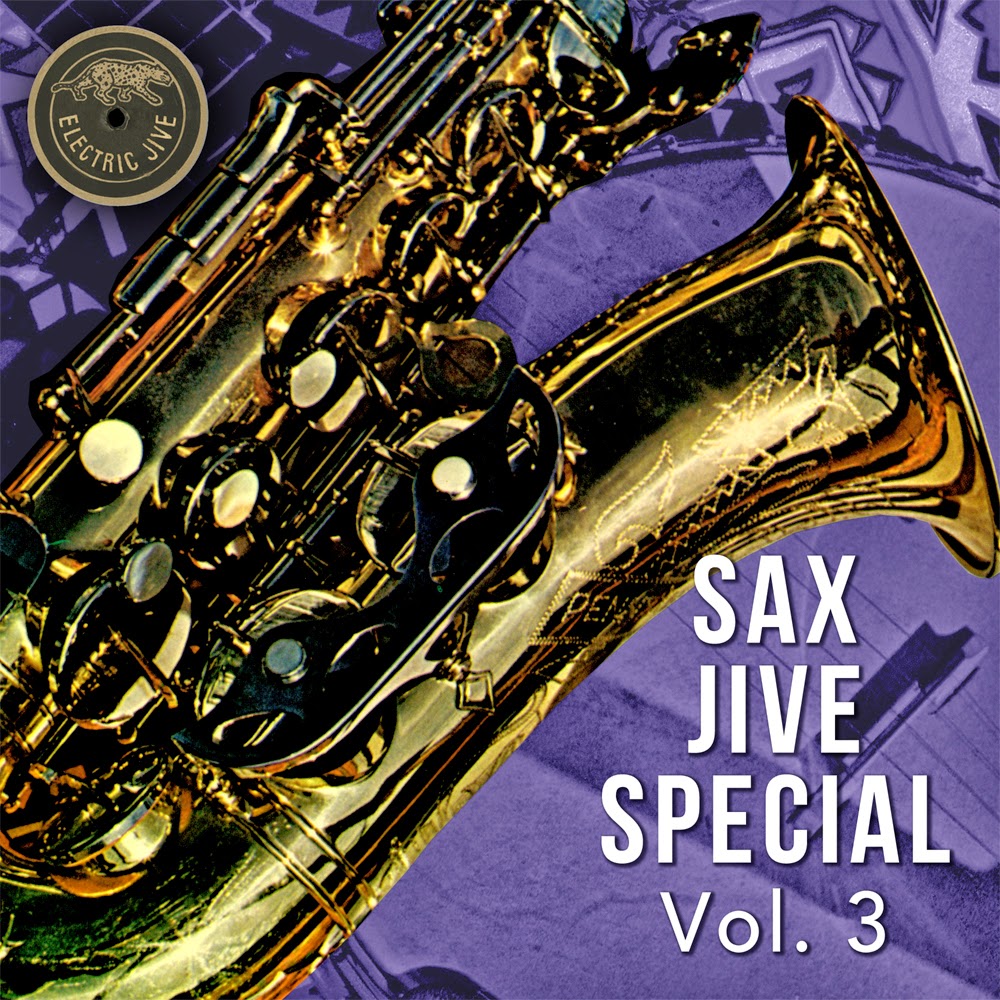
Sax Jive Special - Vol. 3

Following on from Accordion Jive Special – Vol. 1, we present the next in our series of South African jive specials. We’re sticking with the instrumental theme for now, and onto another popular form of dance music during the mbaqanga era. Sax Jive Special – Vol. 3 spotlights 20 more musical gems originally released on 45 rpm singles between 1965 and 1977.

Our opening tune “Hamba Phepha Lami No. 2”, a 1967 recording from the estimable Makgona Tsohle Band, is a remake of a huge vocal jive hit by the Mthunzini Girls. The original recording – featuring Windy Sibeko on lead vocals – was made just a short while before the sax jive reinterpretation, but was already making waves in Durban where broadcaster K.E. Masinga gave the tune regular airplay on the then-Radio Bantu operation. This was not an unusual situation: two other numbers in this compilation, “Tetemuka” (from Abafana Bama Big Bag – or the Big Bag Boys, as they were more commonly known) and “Izulu Liya Duduma No. 2” (another Makgona Tsohle Band masterpiece) had alternate vocal recordings that were hits of their own accord.
Alto saxophonist West Nkosi blows both his trusty horn and a melodica in “Hamba Phepha Lami No. 2”. It appears that there was a fashion for the melodica at the time, as the instrument pops up again in “Theogedi” – an atmospheric 1965 sax jive from Makgolokgolo, in reality a cover name for the same Makgona Tsohle Band – and in the intro to “Tetemuka”, featuring Sipho Bhengu on alto sax duties. Tom Vuma was the lead guitarist for Abafana Bemvunge, the band the backed the Mthunzini Girls who performed “Tetemuka No. 2”. In the early 1970s, Vuma left Mavuthela and moved over to EMI where he began honing a career as a producer, continuing to play his guitar on dozens of vocal and instrumental mbaqanga sessions. One of his sax jive numbers, “Shake Shake No. 500”, has a brilliantly pacey beat and loose sax phrases.
As with Monday’s compilation, I have a few favourites that I feel the need to single out: “Bye Bye” presents the Makgona Tsohle Band at their peak, with excellent rubber-thick melody from rhythm guitarist Vivian Ngubane. “Ezamabone” and “Taxi Driver” are the two numbers that represent the wild ‘jive mabone’ craze of 1973, both of which feature West Nkosi on alto sax but performing with two different instrumental outfits. “Taxi Driver” just edges it for me with its tough mabone drumbeat and rocking guitar rhythms. Another gem is the superbly swift “Hamba Nami”, credited to Big Mukwebo and His Home Boys. ‘Mukwebo’ refers to James Mukwevho – not the alto sax player but in fact the leader and bass guitarist of the Zwino Zwino Boys, the second-tier Mavuthela backup team (behind the first-tier Makgona Tsohle Band) that actually performs this number. (‘Zwino zwino’ is Venda for ‘now now’, denoting ‘ultra-modern’.)
Going back to West now and his 1972 recording “Intambo”, which is marvellous. It’s a beautifully melodic sax-and-accordion-jive tune with yet another of those brilliant spoken intros, which – as far as I can tell – sings the praises of a new Mavuthela recruit, groaner Paulus ‘Mgodlagodla’ Mabunda. Strange! Mavuthela boss Rupert Bopape provides an amusing spoken intro to “Stop Press” by Mathwalimbuzi, featuring ace musician Sello Mmutung fronting the Makgona Tsohle Band with his alto sax. As the 1970s wore on, the beats became harder and tougher – “Is Out Now” (by Albert Motha’s Amazulu Amnyama) and “Take Time” (by Fastos The Great, aka sax jiver David Khanyile) are from that late 1970s period which saw the final evolution of mbaqanga. Eventually the sound was completely usurped by a new mixture of jive, soul and disco.

A big thanks from me to Laurent Dalmasso for providing Electric Jive with 45 rpm transfers of “Intambo” and Shasha and Jackey’s “Makgona Tsohle”.

What are you waiting for? Download this mix and get your groove on! YEBO!! ☺

SAX JIVE SPECIAL – VOL. 3
COMPILED BY NICK LOTAY

01) MAKGONA TSOHLE BAND – HAMBA PHEPHA LAMI NO. 2 (1967)
02) WEST NKOSI AND HIS ALTO SAX – BYE BYE (1965)
03) MAKGOLOKGOLO – THEOGEDI (1965)
04) ABAFANA BAMA BIG BAG – TETEMUKA (1968)
05) MAKGONA TSOHLE BAND – IZULU LIYA DUDUMA NO. 2 (1967)
06) PAULUS MASINA AND HIS SAX – MADUNA (1969)
07) MAMBAZA NABAFANA BOMSHOSHOLOZO – HILLS OF JIVE (1971)
08) MAZEICKS – SHAKE SHAKE NO. 500 (1972)
09) ABAFANA BOMCIKICO – BAROTHO (1973)
10) WEST NKOSI NABASHOKOBEZI – TAXI DRIVER (1973)
11) MARKS MANKWANE AND HIS SHALUZA BOYS – EZAMABONE (1973)
12) BHENGU & BHENGU – EKHONENI (1972)
13) BIG MUKWEBO AND HIS HOME BOYS – HAMBA NAMI (1974)
14) WEST NKOSI NABASHOKOBEZI – INTAMBO (1972)*
15) SHASHA AND JACKEY – MAKGONA TSOHLE (1972)*
16) HAMILTON NZIMANDE – GIG 74 (1974)
17) MATHWALIMBUZI – STOP PRESS (1976)
18) AMAZULU AMNYAMA – IS OUT NOW (1977)
19) FASTOS THE GREAT – TAKE TIME (1977)
20) MARKS MANKWANE AND THE SHALUZA BOYS – N.Y. 4 (1976)

Download link: MF

VOL. 1 | VOL. 2

Monday, 6 April 2015

Electric Jive Jukebox: Isitimela Sase Tekwini


This jukebox idea came from an idle daydream about how much space would be needed to store one of every record that was ever made and pressed in Johannesburg since 1932 when Eric Gallo established South Africa's first press.

South Africa's recorded music heritage is one such "jukebox" with too many lost, forgotten and out-of-print musical creations. An uncounted large number of recordings have been made to cater for diverse and eclectic musical, tribal and sub-cultural tastes. In the course of digging for records I have turned up some great music on 78rpms or 45rpms that I cannot find on albums. So, how then to present them on this blog?

The original records were bought by a sizable urban African populace and enjoyed  at household parties, shebeens, fund-raising dances in halls. While I cannot find evidence of jukeboxes having played much part in this scene, the idea of a "jukebox selection" makes for a comfortably loose way of grouping some rare and out of print records together for a post on Electric Jive.

Imagine if you will, a massive jukebox filled with the most diverse representation of sounds that were recorded and sold in cities and towns across the country. Traditional tribal "trance" recordings made by visitors to the studios, gospel and religious choirs, mbaqanga, soul, jazz, disco, funk - it was all very much part of the possible "selection" from what was available.

Electric Jive Jukebox Number One is a selection of  60s mbaqanga with some swing and jive themed around a train-ride holiday-to-Durban. Some great female vocal jive, swing and mbaqanga for a sub-tropical Durban holiday feeling ... just like it has been this long-weekend. Enjoy

1. Isitimela Sase Tekwini - Trutone Dolls (78rpm Stokvel ST.019).
2. Kumnandi Ethekwini - Reggie Msomi's Love Birds (45rpm Gumba Gumba MGG698) (1977).
3. Gijima Mfana - Mthunzini Girls (78rpm Motella MO120).
4. Big Brain Jive No.2 - Transvaal Rocking Jazz Stars (78rpm Columbia YE6039).
5. Ndode Khohlanele - Thandi & Lo Six (78rpm Zonk TV.222 )
6. Lucky Star Twist No.2 - Golden City Sisters (78rpm Tempo KT.525)
7. Ngaliwe - Durban City Queens - (78rpm DRUM DR166)
8. Dudu - Thandi & Lo Six - (78rpm Zonk TV.222)
9. La Conga - West Nkosi (78rpm Gallo USA USA321)
10. Erautini - Shanty Town Trio with Thandi Mpambani (78rpm Colombia YE55)
11. Wongkhonzela - Durban City Queens (78rpm DRUM DR166)
12. Madison Square No.2 - Golden City Sisters (78rpm Tempo KT.525)
13. Union Express - Albert Ralumini (78rpm RCA Victor Top Beat RCA291)
14. Durban Road - Makhona Zonke Band
15. Iwisa Lakho - Johnson Mkhalali with the Mabone Boys (45rpm GoGo GGB612) (1977)
16. 1968 Special - Mr V. Mzwandile & His Accordeon (45rpm Up Mavuthela UPM812) (1973)
17. Mthathe Masaka - Boy Masaka (78rpm Columbia YE0658)
18. Ungalile - Joyce Mogatusi & Boy Masaka (78rpm His Master's Voice JP876).

Download link here

Monday, 29 December 2014

New Year Jive! An EJ Special


Merry Christmas and Happy New Year from Electric Jive!

We hope you’ve been enjoying the festive treats shared throughout December – and it is my pleasure to bring 2014 on EJ to a close with a smashing goody bag of 1960s and 1970s mbaqanga. Whether you’re ringing in the New Year with a celebratory party or doing something rather low key does not matter one iota – whatever your situation, our New Year Jive is the compilation that you NEED to be playing at full volume (and dancing along to) when the clock strikes twelve!

The girl group and groaner combination almost exclusively dominated the black pop music scene of 1960s and 1970s South Africa. The origins of the trend go back to the late 1950s with the birth of a girl group factory-line, the slow development of jive and the ultimate decline of intricate African jazz. Electric instrumentation arrived at the right time and the foundations of mbaqanga were laid. The tame early electric jive soon advanced into the now familiar rock-solid elastic mbaqanga, personified by fierceness, energy and thunder. Ensembles like the Sweet Sixteens and the Dark City Sisters successfully paved the way for the Mahotella Queens, who in turn influenced the formation of Izintombi Zesi Manje Manje, and on and on the story goes. Key to the success of the new mbaqanga girl groups were the strong-willed and determined studio producers (or ‘talent scouts’) who ran tight ships, encouraged a factory-line approach to music making and held close relationships with people in the right places – which ensured mbaqanga music was almost vehemently propagated across the state broadcaster’s Radio Bantu service. Although this chagrined the African elite, mbaqanga was already becoming a national craze and the black public firmly embraced the music in very much the same way their counterparts in the United States embraced the Motown sound.

“Utshodo Lumantwengu” is a fantastic example of mid-1960s girl group mbaqanga. This tune, telling the story of a girl fighting off the advances of a romeo hobo, was recorded in 1966 by Nobesuthu and Gcaba Twins. This shortlived trio produced a number of up-tempo vocal jives during 1965 and 1966 before the main singer – Nobesuthu Shawe – joined the rival Izintombi Zesi Manje Manje in 1967. One of Izintombi’s first big hits was “Pendula Magwala”, a fast-paced number with thrilling drum patterns and tightly layered vocal harmonies. Izintombi’s lead singer was Sannah Mnguni – who by 1972 had built up enough recognition and popularity to feel able to quit the group and form a brand-new ensemble named Amagugu. Sannah’s notoriety is celebrated in a collaboration with Zulu-traditional guitarist Frans Msomi and violinist Ncane Ndlovu, the appropriately-titled “Sannah”.

Although Izintombi tried and sometimes even overtook them in the popularity stakes, the Mahotella Queens were South Africa’s most popular girl group of the mid-to-late 1960s and early 1970s, releasing a string of hugely successful singles (on both 78 and 45rpm) and performing in venues ranging from wedding parties to huge soccer stadiums. “Jive Jibav No. 7” tells every boy and girl in the country to take part in the latest dance craze, while “Isigubhu Sabalozi No. 2” – the 1972 follow-up to a huge 1970 hit of the same name – emphatically states that the tough Mavuthela mgqashiyo beat shall never die. By the mid-1970s, the Queens’ tour schedule was so hectic that a number of other vocalists kept their name going on record. A multi-tracked Irene Mawela performs “Uthando Luyisilima” alongside Potatoes Zuma, aka Indoda Mbhodlomane, a wonderful bass vocalist but someone whose stage name rides the waves of that true king of the groaners, Indoda Mahlathini.

Two other groaners following in Mahlathini’s footsteps were Umfana Wembazo – real name Robert Mkhize – and Boy Nze – otherwise known as Lazarus Magatole. Mbazo’s vocals can be heard punctuating the chorus in Dulcie Luthuli Nabalilizeli’s “Ntomb’uthini” and in his own splendid solo effort, “Maye Mina”. Boy Nze’s “Uzobuya” isn’t one to miss either – it’s perhaps one of the finest solo records from a male vocalist that I’ve ever heard.

Alongside the Queens at Mavuthela were junior bands, some of whom over the years included the Mthunzini Girls, Izintombi Zomoya, Umgungundlovu Dolls, Love Birds and many others. The Mthunzini Girls borrow from the US and inject soul into the mbaqanga brew – Paulina Zulu is the lead singer on (and songwriter of) “Tsohang” and “Ikele Ngoaneso”, two downright funky Sotho tunes that should at least make your foot tap. Izintombi Zomoya’s “Isilomo” – a fantastically rapid tune with animated vocals and excellent lively instrumentation – should also stir your soul.

A few more notable highlights for me - "Orlando", featuring the perennial vocal sound of the Dark City Sisters in all their mid-1960s glory, with Esther Khoza shouting words of praise for the Orlando Pirates; the group's 1976 Sotho ode "Dikgarebe" with Grace Msika's mid-song chant and Joyce Mogatusi's inimitable alto; "Daly", from the somewhat unknown Lesotho Sisters, just for the delightfully swish three-part harmonies; "Sophie" by Izingane Zomgqashiyo and its sweet lead guitar patterns; the strength of vocal passion in the Umgungundlovu Dolls' "Vuka Uvale"; the archetypal electric elasticity in all its glory in Reggie Msomi's Love Birds' "Uzwakanjani"; and the effective simplicity of the all-too-short "Umhlaba Awunoni" from Izintombi Zesi Manje Manje under another name.

So that’s all from Electric Jive for the moment. Whatever the New Year brings, you can rest assured we'll still be doing our utmost best to bring the sounds of yesteryear back to the forefront where they belongs. We're very grateful for all the support and appreciation you send our way - we just do it for the music and the people who created it all. So... download the following mix of mbaqanga heaven and clear the floor, ready to jive until you drop.

See you in 2015!

Enjoy!

NEW YEAR JIVE!
COMPILED BY NICK LOTAY

01) NOBESUTHU AND GCABA TWINS – UTSHODO LUMANTWENGU (1966)
02) DARK CITY SISTERS – ORLANDO (c1965)
03) S’MODERN QUEENS – PENDULA MAGWALA (1967)
04) MARULA BOOM STARS – JIVE JIBAV NO. 7 (1965)
05) LESOTHO SISTERS – DALY (c1966)
06) IZINGANE ZOMGQASHIYO – SOPHIE (1968)
07) IZINTOMBI ZOMOYA – ISILOMO (1972)
08) BOY NZE – UZOBUYA (1971)
09) DULCIE LUTHULI NABALILIZELI – NTOMB’UTHINI (1971)
10) MSOMI AND AMAGUGU – SANNAH (1977)
11) UMGUNGUNDLOVU DOLLS – VUKA UVALE (1970)
12) MTHUNZINI GIRLS – TSOHANG (1972)
13) IZINTOMBI ZESI MANJE MANJE – SHE KEEPS ON KNOCKING (1974)
14) MTHUNZINI GIRLS – IKELE NGOANESO (1972)
15) AMAQHAWE – UMHLABA AWUNONI (1974)
16) DARK CITY SISTERS – DIKGAREBE (1976)
17) MAHOTELLA QUEENS – ISIGUBHU SABALOZI NO. 2 (1972)
18) INDODA MBHODLOMANE & MAHOTELLA QUEENS - UTHANDO LUYISILIMA (1974)
19) UMFANA WEMBAZO – MAYE MINA (1974)
20) REGGIE MSOMI’S LOVE BIRDS – UZWAKANJANI (1977)

MF

Thursday, 5 June 2014

R.I.P. Beatrice Ngcobo

Electric Jive has recently learnt of the tragic passing of one of the former members of the Mahotella Queens. We pay our respects to the late Beatrice Ngcobo today with a short post reflecting on her life and career.

Beatrice was born in Umbumbulu, Durban on 25 October 1944. Unlike so many other singers of her era, she was not born in a musical family, but she did sing in a school choir, developing a distinctly rich and smooth alto voice. Beatrice’s family was hit hard by the death of her father in 1955, and Beatrice was subsequently unable to complete her school studies because of the high costs involved. Her school had, however, helped to give Beatrice a great love for music. She started singing in her teens in and around Durban with various girl groups, and was eventually discovered by promoter Roxy Jila in the late 1960s. Beatrice was soon cast in his play Chief Mamba, performing on stage in an acting role for the first time in her career and without any prior training. She latterly recalled to Electric Jive the exciting buzz of performing for audiences every night.

Beatrice was still performing in Durban with Jila’s company when singer John Moriri and guitarist Marks Mankwane turned up at a showing of Chief Mamba in 1971. The two artists, both of them in-house musicians for Gallo Africa’s Mavuthela Music Company, had travelled from Johannesburg to Durban in search of female singers for Moriri’s then-backing group, Mthunzini Girls, which had recently split. Moriri and the Mthunzini Girls had a number of pending shows booked in Malawi, meaning replacement girls had to be found in time. Moriri and Mankwane were immediately taken with Beatrice’s performance and invited her to become the lead singer of the Mthunzini Girls. An excited Beatrice gladly accepted their offer and awaited the arrival of special transport from Durban to Johannesburg organised by Mavuthela bassist Joseph Makwela. In addition to Beatrice as lead singer and John Moriri as the male soloist, the other Mthunzini Girls were Olive Masinga, Whyte Mkhulisi, Julia Ngubane, Beauty Radebe and Phyllis Zwane.

Beatrice’s first composition as a recording artist was “Njomane”, a song that became something of an anthem for schoolchildren back home in Durban through constant airplay on Radio Zulu. Soon after recording the hit, Moriri and the Mthunzini Girls travelled to Malawi to perform. While there, Beatrice realised she was pregnant and decided to return home to her mother in Durban. She gave birth to her son Bongani in late 1971, spending a very short three months at home before rushing back to Johannesburg in the name of music, leaving Bongani in the care of her own mother. When Beatrice arrived back at the Gallo studios in March 1972, neither Moriri nor the Mthunzini Girls could be found. She discovered that when Moriri and the rest of the girls finished the Malawi tour and arrived back in Johannesburg, Mavuthela boss Rupert Bopape had refused to give them their wages, saying that he didn’t have the necessary money to pay them. Moriri and the rest of the girls resigned in protest. At the same time, Mahlathini and several of the Mahotella Queens quit in a similar dispute with Bopape over touring salaries. Bopape and Marks Mankwane decided to rebuild the Mahotella Queens and let the Mthunzini Girls name perish, simply because Mahotella was the more popular and well-known name. Beatrice found herself being recruited into the biggest female mbaqanga group of the day and was ecstatic. In 1973, she performed on stage for the first time as a Mahotella Queen when the group travelled a long distance to perform in Molepolole, Botswana. The line-up, then consisting of Hilda Tloubatla, Caroline Kapentar, Beatrice Ngcobo, Nancy Ngema, Thandi Nkosi and Thandi Radebe, performed in the local town hall as well as various other places including a chief’s kraal.

MAHOTELLA QUEENS, 1979
Clockwise from top left: Caroline Kapentar, Nomsa Njakazi,
Beatrice Ngcobo, Emily Zwane, Thandi Nkosi
Beatrice recorded and performed with the Queens throughout the 1970s and also composed a number of their hit songs. Most of her compositions were based on events that happened in her own life. She wrote “Uxoshisa Abanye” after rumours began spreading throughout Mavuthela that Ray Mkize (Abafana Baseqhudeni member and one of Mavuthela's Public Relations Officers) wanted to get Beatrice fired for no apparent reason. Lead singer Emily Zwane takes Beatrice’s song to a high plateau with her sweet soprano. Another composition, “Sengidlala Amakhehla”, told the story of Beatrice’s love affair with a much older gentleman who eventually broke her heart. Her song “Bongani Mntanami” was one very close to her heart. Beatrice would return home to Durban to care for her son Bongani as often as her bosses would allow, but while busy working in Johannesburg, her ageing mother would often complain over the phone to Beatrice about Bongani’s mischievousness and bad behaviour towards her. Beatrice decided to teach her son a lesson by writing a song for him, telling him through loving lyrics to respect his family and stop misbehaving. Although Emily Zwane sang lead on most of the Mahotella Queens recordings of the 1970s and 1980s, Beatrice was allowed to do the lead vocals on some of the hits including "Izinyembezi Zesuliwe", “Malume” and “Isidwaba”. Emily and Beatrice share the lead vocal duties on a track they wrote together - "Kobanini Ngihlupheka".

BEATRICE as seen in Jeremy Marre's
Rhythm of Resistance
Beatrice was still a prominent member of the Mahotella Queens line-up when English filmmakers visited South Africa hoping to film the group: first was Jeremy Marre in 1978, who filmed a Mahotella Queens stage performance for his documentary on black South African music, Rhythm of Resistance; and then a BBC team who were making a documentary about the music and influences of Hugh Masekela in 1984. In the latter documentary – broadcast only once on BBC2 in May 1985 – the Mahotella Queens (by now consisting only of Emily Zwane, Caroline Kapentar and Beatrice Ngcobo) performed their recent smash hit single “O Boshako” accompanied by accordionist Mzwandile David.

MAHOTELLA QUEENS performing
"O Boshako" in 1984
L to r: Emily Zwane, Caroline Kapentar,
Beatrice Ngcobo
Beatrice stuck with the Mahotella Queens even through a fallow period during the mid-1980s which saw the group leave the Gallo organisation for the first time in their career. A number of messy behind-the-scenes incidents led to Marks Mankwane, the producer of the Queens, resigning from Gallo and taking the group with him to a new independent label. The venture lasted for almost a year until they once again uprooted and moved over to local EMI subsidiary CCP. During this era, the popularity of the Queens declined significantly and Beatrice detected Marks Mankwane’s disillusionment with (and eventual resentment of) the group that had once sold out whole stadiums.

A number of musical projects during the early 1980s had increased international awareness of South African music. Some of these included Rhythm of Resistance, Malcolm McLaren’s Duck Rock, Duck Food, The Indestructible Beat of Soweto and Paul Simon’s Graceland. Marks Mankwane was persuaded by West Nkosi to rejoin Gallo and reunite Mahlathini and the Mahotella Queens for overseas performances. Mankwane duly agreed and began conducting rehearsals between Mahlathini and three of the original Mahotella Queens (Hilda Tloubatla, Nobesuthu Shawe and Mildred Mangxola), neglecting to inform Beatrice, Emily and Caroline, who were still recording and performing under the Mahotella Queens name. Beatrice and her bandmates found out only after spotting Hilda’s crew in another rehearsal room and were hurt by Mankwane’s deception. While Mankwane now busied himself with preparations for the reunited Mahotella line-up to visit the US and Europe, Beatrice and her bandmates were left dealing with the stigma of being unceremoniously fired and deprived of the opportunity to perform for audiences abroad.

During the 1990s, Beatrice and some of the former Mahotella Queens regrouped to perform under the same name for South African audiences, appearing at several local traditional music festivals and community halls. In order to avoid misunderstandings, they eventually decided to make a distinction between their group and the one touring the world with Mahlathini, tweaking their group name slightly to become X-Mahotella Queens (the ‘X’ obviously referring to ‘ex-’, as in ‘former’).


ABOVE: A snippet from a new recording by the X-Mahotella Queens, "Badla Inqondo"

X-MAHOTELLA QUEENS in 2011
L to r: Emily Zwane, Beatrice Ngcobo,
Thandi Nkosi, Caroline Kapentar
In 2011, a grouping of now-forgotten stars from mbaqanga’s past – including X-Mahotella Queens – united to form a non-governmental organisation called Omama Besxaxa Foundation. The foundation has held a number of successful shows and workshops in township halls across Johannesburg over the last three years, most recently holding an all-day show at San Kopano Hall in Alexandra in March 2014. The show featured a galaxy of stars including X-Mahotella Queens, Izintombi Zesimanjemanje, Izingane Zoma, John Moriri and the Manzini Girls, Isigqi and others. The show had been in the pipeline for months and Beatrice was looking forward to performing for audiences after so long. X-Mahotella Queens lead singer Emily Zwane had recently retired from performing, leaving Beatrice to step into the spotlight as leader for the first time in her career.

Tragically, Beatrice was knocked down and killed while visiting family in Durban in February 2014.

We at Electric Jive mourn the loss of a very special lady but give thanks that we were able to meet her and interview her at length about her wonderful career before her sudden passing. Life had dealt Beatrice some hard blows, including the sudden and untimely deaths of two of her four children and having to cope with extremely poor living conditions in her old age. But this was a woman who was blessed with enough strength to keep fighting in spite of the many obstacles in her way. Beatrice confirmed to us that she was happy and satisfied about the work she had done over four decades immersed in music, hoping that her life story would be valued in particular by the younger generation. We hope our humble tribute has done her proud.

Rest in peace, mam' Beatrice!

01) UXOSHISA ABANYE
02) DEMAZANA
03) ISIDWABA
04) MALUME
05) NGOTHINI NA?
06) BONGANI MNTANAMI
07) KETLARENG
08) SENGIDLALA AMAKHEHLA
09) KOBANINI NGIHLUPHEKA
10) IZINYEMBEZI ZESULIWE

My thanks to Matt for sharing two of the above songs, and a special acknowledgement to Norton Ramavhoya for giving so much of his time and efforts towards our mission - without his hard work, a tribute like this would simply not have been possible to compose. Thank you Norton!

Monday, 18 November 2013

Classic mbaqanga: Indoda Mahlathini (1969)

Today, Electric Jive is proud to present another compilation of hit singles from the days when mbaqanga was the sound of the townships - Indoda Mahlathini, released in 1969 on the Motella label, is a twelve-song LP that features some of the best-selling Mavuthela material of the past year. As is normally the case with this kind of record, the listener will find that they simply must get up and start grooving to the great vocal jive sounds offered here.

Although this LP bears his identity, it is rather interesting that Simon ‘Mahlathini’ Nkabinde appears only on four of the twelve songs! This particular time period was the absolute peak of Mahlathini’s popularity. The rightful king of all the groaners, this crowd-puller was the only singing star who attracted fans from right across the board – kids as young as ten would attend his shows, as well as elderly people who scrambled to the halls in their walking frames. It is obvious that the compilers of this album wanted to capitalise on Mahlathini’s enormous success by using his renowned moniker as the title of this record. The King’s bellowing groans can be heard on his solo numbers “Imbodlomane” and “Gabi Gabi”, as well as “Sengibuya Emarabini” which is recorded with the Mahotella Queens and “Akashaywa Umfazi” by the Sweet Home Dames.

From Mavuthela’s start back in 1964, the same team of ten (or so) female singers had recorded under the various group names dreamed up by Rupert Bopape. Following the recruitment of more singers during 1965, Bopape took one of the names and built it up into a regular recording and touring line-up: the Mthunzini Girls (Julia Yende, Windy Sibeko, Teddy Nkutha and Virginia Teffo) were the junior group of singers. The Girls also recorded under a second name, Izingane Zo Mgqashiyo. The senior female group at Mavuthela performed and recorded as the Mahotella Queens, but also cut records under various other (non-touring) names including Izintombi Zo Mgqashiyo, Marula Boom Stars, Soweto Stars and Sweet Home Dames. Some of these names were interchangeable, and it is not unusual to listen to a record credited to the Sweet Home Dames but featuring the voices of the Mthunzini Girls (or vice versa).

“Jive Didiza” was one of the Mthunzini Girls’ biggest-selling hits of the late 1960s. Possibly recorded as Mavuthela’s answer to the rival Izintombi Zesi Manje Manje’s celebrated 1967 top seller “Isidudla sika Joseph”, this number features the robust lead vocals of Yende who sings “siyatshitshizela, isidudla sikaMahlathini” (we’re moving like young girls, Mahlathini’s big women)! “Tete Muka No. 2” is a song that has an amazingly crazy guitar intro and a fast-paced beat that just won’t quit – and that’s definitely not a bad thing. The group’s other track on this LP is the wonderfully rumba-tastic “Sangena, Sangena”, a driving and dynamic number that happens to be my favourite one. The late Windy Sibeko’s distinctive alto voice can be clearly heard on these two classics.

The senior Mavuthela female group appears on four tracks on Indoda Mahlathini. One of them, “Sengibuya Emarabini”, uses the familiar and famous Mahotella Queens name. The usual rhythmic mgqashiyo beat works its magic in this lovely number composed by Rupert Bopape and Marks Mankwane. The other three numbers are credited to the Sweet Home Dames and feature the normal Mahotella line-up of the day, including Mildred Mangxola (who recently retired from the current line-up of the group in 2013), Juliet Mazamisa, Ethel Mngomezulu, Thoko Nontsontwa and Nobesuthu Shawe. Mangxola’s two compositions, “Yeka Amanga” and “Akashaywa Umfazi”, are yet another couple of examples of solid girl group harmony. Another gem is Shawe’s composition “Dumazile”, the complicated tale of a couple of lovers.

Later into the 1960s, with more young female vocalists joining the roster, Bopape took another of the pseudonyms used by the senior group and built up a third unit of junior singers. The Dima Sisters, who appear on three songs, included Sheba Malgas, Mavis Maseko, Nancy Ngema and Julia Ngubane. Various Mavuthela staff including Shadrack Piliso, Ellison Themba and the two Lerole brothers contributed to the group’s material. Following the departures of several vocalists in the early 1970s after a salary disagreement, the most talented singers in the lower-ranking Mavuthela groups were promoted into the senior Mahotella Queens line-up. Several Izintombi Zomoya members joined the frontline of the Queens, with two of the Dima Sisters also coming on board – Nancy Ngema and Sheba Malgas.

While you’re waiting for this LP to download, you’d best get your dancing shoes ready and get ready to do some heavy jive mgqashiyo until you drop. Enjoy!


VARIOUS
INDODA MAHLATHINI
produced by Rupert Bopape
Motella LMO 110
1969
Vocal Jive

RS / MF

Monday, 15 July 2013

Classic Mbaqanga Girl Groups - Vol. 4

ABOVE - IZINTOMBI ZESI MANJE MANJE IN 1975.
CLOCKWISE FROM TOP LEFT: LINDIWE MTHEMBU, JANE DLAMINI, NOBESUTHU SHAWE, RUTH MAFUXWANA

Collecting records from the glory days of black South African music invariably results in the accumulation of “factory-line stuff”. It is something inherent within mbaqanga music, which was as quick to produce as the traditional snack it was named after. But very often, that factory-line material would be intercepted. The individual talents and geniuses of the wonderful musicians in the studio would collide spectacularly and explode. The results of that explosion were stunning masterpieces that blended superb vocal harmony and sumptuous guitar rhythm together seamlessly. It is these masterpieces that Electric Jive presents here proudly today – the fourth installment of our regular series, Classic Mbaqanga Girl Groups.

“Awuthule Bo”, recorded in 1970, is one of the classic hits from the Mahotella Queens repertoire during their most successful era. Nobesuthu Shawe, one of the group’s regular vocalists and the composer of this song, tells her baby through fabulous high-spirited jive to listen to mother and quieten down. The ladies’ 1967 tune “Umuzwa Ngedwa” is an oddity because of its unusual swing-like melody, a throwback to the styles that their brand of mbaqanga had replaced. On the other hand, “Metsoalle Yaka”, is a deeply soul-infused 1970s number with some crazy-brilliant vocal work, featuring the golden voices of Thandi Radebe, Beatrice Ngcobo, Emily Zwane, Thandi Nkosi, Constance Ngema and Caroline Kapentar. The Mahotella Queens was perhaps the finest example of a truly classic mbaqanga girl group. The harmonies blended perfectly, the songs – either based on themes of love, folklore or topical matters – were always relevant, and the essential instrumental backup from the Makgona Tsohle Band was as raw and emotive as possible. Just one listen to their selections in this compilation certainly does go some way towards confirming those statements.

While the Mahotella Queens was the first group on the scene to pioneer the new, more electric-led female vocal jive of the mid-1960s, they were certainly not the only team of singers to shoot to stardom with beautiful recordings. Izintombi Zesi Manje Manje arose some three years after the Queens had already bedded into the market as the most successful female group of the 1960s, but this wasn’t going to deter Sannah Mnguni and her fellow songbirds, Thopi Mnguni, Thoko Khumalo and Nunu Maseko, from challenging the Queens for the crown. “Salani Kahle” spotlights Sannah’s beautiful vocal talent against the solid rhythm of the group. Along with the likes of mbaqanga vocalists such as Hilda Tloubatla, Irene Mawela, Olive Masinga and Julia Yende, Sannah possessed a voice that was instantly recognisable no matter which group she recorded with. She had left Izintombi Zesi Manje Manje in 1968, moving to the famous and well-known girl group the Sweet Sixteens which was led by Irene. Although Sannah did record some enchanting, hypnotic tunes with the group like “Uthuleleni”, she decided to return to Izintombi in 1970, bringing with her a junior Sweet Sixteen, Jane Dlamini. In 1972, the Izintombi line-up was thrown into jeopardy when the core members of the team resigned. Sannah, Thopi and Thoko – as well as lead guitarist Hansford Mthembu, Thopi’s husband – left the company and joined EMI, where they formed a successful new mbaqanga girl group called Amagugu. It remained a popular act until the early 1980s, when changing musical tastes brought an end to the dominance of the mbaqanga girl group. Izintombi Zesi Manje Manje retained its popularity through the early 1970s with a revised line-up: Jane Dlamini was joined by Nobesuthu Shawe (joining Isibaya after four years with Mavuthela’s Mahotella Queens), Beatrice Ngcobo (who was to depart the group soon and join the Mahotella Queens later in 1973), Lindiwe Mthembu and Ruth Mafuxwana. “Siya Kwa Mzilikazi”, featuring Izintombi’s regular groaner Saul Shabalala, was one of the many hits recorded by this newer incarnation of the group. "Sicela Indlela", another tune of similar vintage, sounds so carefree and laidback that it's almost as if the ladies are jamming with each other at a rehearsal.

During the mid-to-late 1960s, Mavuthela Music’s roster expanded so that set units of female singers were formed, utilising many of the names originated by Rupert Bopape back in 1964, and arranged almost in a hierarchy: the so-called “top tier” was the group that recorded under the names Mahotella Queens, Marula Boom Stars, Soweto Stars, Dima Sisters, Izintombi Zomgqashiyo, and the Sweet Home Dames. A second regular unit, featuring the voices of singers such as Julia Yende and Windy Sibeko, recorded under names including the Mthunzini Girls and Izingane Zomgqashiyo. “Sangena, Sangena” is an infectiously loud tune that has a slight-rumba feel to the rhythm – and a melodica is included in the band for good measure! On the other hand, “Akashaywa Umfazi” is the top tier at its best. Written by vocalist Mildred Mangxola and featuring Simon 'Mahlathini' Nkabinde on lead vocals, the song refers to physical abuse against women, although the song could be categorised as being more “classic mbaqanga” than “ballad”. Mangxola had joined Mavuthela in 1965 with her group, the Daveyton Sisters, with whom she had been singing since she was in her teens. The Sisters recorded some solid material for Mavuthela, but was to eventually disintegrate, with Mangxola and fellow Daveyton vocalist Thoko Nontsontwa joining the Mahotella Queens. Mangxola's wonderful, lively vocals can be heard prominently on "Akashaywa Umfazi", "Sengibuya Emarabini" (in which she has a very brief solo) and on an early tune with her old bandmates, "Ulele Emini U Makoti", a song composed by Makgona Tsohle Band drummer Lucky Monama.

After Mahlathini left Mavuthela in 1972 following a dispute over royalty payments with Rupert Bopape, he formed a new group called Amakhosazana which found some astonishing success as a performance-only group. This venture lasted only two years, after which the great groaner joined the new black music operation recently started at Satbel Record Company. Cambridge Matiwane, producer of the new subsidiary, busied himself building up a roster of artists to rival the material pumped out of the successful Mavuthela and Isibaya stables. Mahlathini preferred to work in conjunction with a female group, and although the Mahotella Queens remained the sole property of Gallo’s Mavuthela, a new group was formed at Satbel that was simply named The Queens. Pay disputes over at Gallo saw several of the Mavuthela singers move over to Satbel to record with Mahlathini. These included Koekie Makhanya, Mildred Mangxola, Ethel Mngomezulu and Thoko Nontsontwa. The Queens recorded some of the finest female vocal classics one can find. The raw passion and emotion came across in whatever song they sang, be it a ballad (“Siyaniduduza”, “Nginothando”) or a lively and boisterous tune (“Baratsale”, “Mhlobo Mdala”). Also at Satbel was Izintombi Zephepha, a group led by former Mahotella Queens and Izintombi Zesi Manje Manje vocalist Nunu Maseko. The group mostly recorded with singer Victor ‘Mahlabathini’ Zulu, a fine vocalist and groaner.

Mahlathini Nezintombi Zomgqashiyo (or “MNZ”) was a shortlived reunion between the groaner and five of the 1960s line-up of the Mahotella Queens. MNZ, which was put together by Marks Mankwane in 1983 on the back of a nostalgia trip for mbaqanga’s heyday, was named in that way so as not to disturb the Mahotella Queens line-up of that time, which had been stable for some years by that point. Interestingly, MNZ’s 1984 LP Pheletsong Ya Lerato features Mahlathini on only two of the ten tracks, making that particular album more or less an Izintombi Zomgqashiyo project. “Moradi Wa Mofokeng” is perhaps one of the finest songs produced by this line-up. Hilda Tloubatla, one of the most recognisable and popular lead vocalists of mbaqanga's heyday, leads the ensemble here, and the troupe's vocals are nothing short of strong, hearty and passionate. Backed by the unrelenting beat of the Makgona Tsohle Band, this certainly is the “A” team performing at its very best. While Mahlathini Nezintombi Zomgqashiyo busied themselves recording some of their best new material since the 1960s, the latter-day Mahotella Queens led by Emily Zwane solidly carried on recording the wonderful, sturdy, easy-listening material they were famous for. “Moleko Ntlohele” is a rich, watery ballad that spotlights their beautiful, soulful and emotive voices.

Thanks to Siemon Allen for contributing the Mahotella Queens songs “Awuthule Bo” and “Metsoalle Yaka”, and to Chris Albertyn for the equally wonderful songs from the Sweet Sixteens and Mahlabathini. I’m very grateful to both of you for your help in adding to this collection of classic, wonderful jive…

…and now, it’s over to the girls for another dose of goodness from the archives of yesteryear. I sincerely hope you download and enjoy.

YEBO!

CLASSIC MBAQANGA GIRL GROUPS
COMPILED BY NICK LOTAY
VOLUME 4

1. Awuthule Bo*
Mahotella Queens
Gumba Gumba BL 123
1970
FROM THE LP "BEST OF THE MAHOTELLA QUEENS"
*COURTESY OF SIEMON ALLEN

2. Sangena, Sangena
Izingane Zo Mgqashiyo
Motella LMO 110
1968
FROM THE LP "INDODA MAHLATHINI"

3. Salani Kahle
Izintombi Zesi Manje Manje
CBS CB.4007
1971

4. Mmathobela
Mahotella Queens
Gumba Gumba MGG 716
1977

5. Uthuleleni*
Sweet Sixteens
Troubadour SPA 892
1969
*COURTESY OF CHRIS ALBERTYN

6. Siyaniduduza
The Queens
Soweto SWB 136
1974

7. Siya Kwa Mzilikazi
Izintombi Zesi Manje Manje
CBS LAB 4042
1973
FROM THE LP "SIYA EMSHADWENI"

8. Umuzwa Ngedwa
Mahotella Queens
Smanje Manje SJM 7-5
1967

9. Akashaywa Umfazi
Sweet Home Dames
Motella LMO 110
1968
FROM THE LP "INDODA MAHLATHINI"

10. Baratsale
The Queens and Ndlondlo Bashise Band
King KGB 034
1976

11. Metsoalle Yaka*
Mahotella Queens
Gumba Gumba BL 123
1977
FROM THE LP "BEST OF MAHOTELLA QUEENS"
*COURTESY OF SIEMON ALLEN

12. Mathamyizimimyaba*
Izintombi Zephepha
Soweto SWB 14019
1976
FROM THE LP "MAHLABATHINI AND IZINTOMBI ZEPHEPHA"
*COURTESY OF CHRIS ALBERTYN

13. Musu Dlala Ngami
Mahlabathini
King KGB 006
1976

14. Iminyaka Kayifani
Izintombi Zesi Manje Manje
Masterpiece LMS 529
1977
FROM THE LP "IMINYAKA KAYIFANI"

15. Maile
Mahotella Queens
Gumba Gumba BL 226
1980
FROM THE LP "TSAMAYA MORATUOA"

16. Moradi Wa Mofokeng
Izintombi Zomgqashiyo
Gumba Gumba BL 457
1984
FROM THE LP "PHELETSONG YA LERATO"

17. Moleko Ntlohele
Mahotella Queens
Hit Special IAL 4005
1984
FROM THE LP "KHWATHA O MONE"

18. Vulamehlo
S'morden Girls
Masterpiece MS 508
1980

19. Sidlala Yonke Imidlalo
Izintombi Zesi Manje Manje
Masterpiece LMS 529
1977
FROM THE LP "IMINYAKA KAYIFANI"

20. Ha Bo Tle
Mahotella Queens
Gumba Gumba BL 226
1980
FROM THE LP "TSAMAYA MORATUOA"

21. Sikhulekile*
Mahlabathini and Izintombi Zephepha
Soweto SWB 14019
1976
FROM THE LP "MAHLABATHINI AND IZINTOMBI ZEPHEPHA"
*COURTESY OF CHRIS ALBERTYN

22. Nimzwile Umntimande*
Sannah Mnguni Nesimanjemanje
CBS AB 284
1971
*COURTESY OF CHRIS ALBERTYN

23. Nginothando
The Queens and Ndlondlo Bashise Band
King KGB 034
1976

24. Awungifanelanga*
Sweet Sixteens
Troubadour SPA 892
1969
*COURTESY OF CHRIS ALBERTYN

25. Hole Thaba
Dark City Sisters
HMV JP.1002
1966
FROM THE LP "STARTIME VOL. 3"

26. Ulele Emini U Makoti
Daveyton Sisters
Gallo-USA USA 320
1965

27. Sicela Indlela
Izintombi Zesi Manje Manje
CBS LAB 4042
1973
FROM THE LP "SIYA EMSHADWENI"

28. Uyangizungeza Lombemu
Usizwe Namatshitshi
CBS LAB 4022
1971
FROM THE LP "NOMA UNGAYAPHI BAKHALA NGATHI"

29. Mhlobo Mdala
The Queens and Ndlondlo Bashise Band
King KGB 035
1976

30. Sengibuya Emarabini
Mahotella Queens
Motella LMO 110
1968
FROM THE LP "INDODA MAHLATHINI"

RS / MF
ABOVE - IZINTOMBI ZESI MANJE MANJE IN THE STUDIO IN 1976.
FROM LEFT TO RIGHT: LINDIWE MTHEMBU, JANE DLAMINI, RUTH MAFUXWANA, NOBESUTHU SHAWE AND HILDA TLOUBATLA